


Le dernier exemplaire de cette miniature a ete vendu
Ces autres miniatures pourraient vous interesser
Même marque : Bernard Miniatures


Même origine : autres marques étrangères


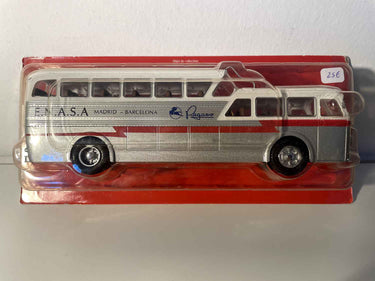


Model Car Pégaso Z-403 Monocasco bus from 1951 (coach / coach / bus)
Scale 1/43

Your payment information is processed securely.
)
Discover this magnificent diecast model car of the 1951 Pegaso Z-403 Monocasco Bus, an iconic vehicle of the Spanish automotive industry that marked the history of European public transport. This faithful 1/43 scale reproduction captures all the elegance and technical innovation of this revolutionary model, making it an essential addition for collectors of diecast model cars representing historic commercial vehicles.
This miniature diecast model car represents much more than a simple coach replica: it bears witness to a time when Spain asserted its industrial know-how through bold creations. A must-have for fans of commercial vehicles and European automotive history, this diecast collectible embodies the golden age of Spanish engineering.
Characteristics of this Diecast Model Car
- Model: Pégaso Z-403 Monocasco bus
- Brand: Pegaso
- Year: 1951
- Scale: 1/43rd
- Color: According to original version
- Protective case included: Yes
- Material: High-quality diecast metal construction
- Details: Precision-crafted with authentic period features
The Pégaso Z-403 Monocasco: Pioneer of Modern Transport
Launched in 1951, the Pégaso Z-403 Monocasco revolutionized the European public transport industry with its innovative monocoque architecture. This single-piece construction, where the body serves as a chassis, provided exceptional rigidity while significantly reducing the vehicle's weight. The Z-403 embodied the modern vision of public transport, with its clean lines and sleek silhouette that contrasted with the traditional coaches of the time.
Equipped with a Pegaso diesel engine producing 125 horsepower, positioned asymmetrically at the mid-section of the vehicle, this bus stood out for its remarkable road performance and exemplary reliability. The strategic engine placement ensured optimal weight distribution and exceptional stability, technical achievements that were revolutionary for the era. Its avant-garde design, with its large bay windows and rounded shapes, had a lasting influence on the aesthetics of public transport vehicles throughout Europe and beyond.
The Z-403 could accommodate between 30 and 45 passengers depending on the configuration, offering unprecedented comfort for long-distance travel. The split-level deck design not only improved passenger visibility but also created substantial luggage space beneath the upper level. Standard versions featured remarkable amenities for their time, including radio equipment, a bar service area, and even a small bookcase, earning it the prestigious designation of "auto-pullman" due to its luxurious appointments.
The Z-403 was an immediate commercial success, both in the Spanish market and for export. Its legendary robustness and ease of maintenance made it the preferred choice of European transport companies, consolidating Pegaso's international reputation in the heavy goods vehicle sector. Primary customers included prestigious Spanish airlines Iberia and Aviaco, who used these distinctive coaches as airport shuttles, as well as the tour operator Atesa. Approximately 50 units were produced between 1951 and 1957 at the Pegaso plant in Barcelona, making authentic diecast model cars of this vehicle particularly sought-after by collectors today.
Pegaso: Spanish Industrial Excellence and Heritage
By the early 1950s, Pégaso had established itself as the flagship of the Spanish automotive industry. Born in 1946 from the ashes of the Hispano-Suiza company, this Barcelona-based brand aimed to create exceptional vehicles, from rugged trucks to revolutionary sports cars and innovative public transport solutions. When the Z-403 was created, Pégaso was experiencing a period of remarkable expansion, benefiting from government support as part of Spain's post-war industrial reconstruction efforts.
Pegaso's history dates back to the immediate post-war years, when Spain sought to rebuild its industrial base and establish economic self-sufficiency. Founded under the direction of renowned automotive engineer Wifredo Ricart and operating under the state-owned ENASA (Empresa Nacional de Autocamiones S.A.) conglomerate, the company quickly developed recognized expertise in the design of commercial and luxury vehicles. The winged horse brand became synonymous with innovation and quality, exporting its creations throughout Europe, Latin America, and beyond, with particular success in the Benelux countries, Venezuela, and Cuba.
Between 1946 and 1990, Pegaso built over 350,000 vehicles, with peak production reaching 26,000 units in 1974. Pégaso made its mark on automotive history with its ability to combine traditional craftsmanship with industrial modernity. Its engineers, heirs to Hispano-Suiza's prestigious expertise, revolutionized European road transport with cutting-edge technical solutions. This expertise is reflected today in the Pégaso miniature collections, where diecast model cars serve as testament to this exceptional industrial heritage.
Why This Diecast Model Car Deserves a Place in Your Collection
This 1/43 scale diecast model car of the Pegaso Z-403 stands out for several compelling reasons. First, it represents a genuine piece of automotive archaeology, capturing a vehicle that helped define modern coach design throughout Europe. The monocoque construction that made the original so revolutionary is faithfully reproduced in miniature form, allowing collectors to appreciate the engineering innovation that set this bus apart from its contemporaries.
The quality of craftsmanship in this diecast model car reflects the precision manufacturing techniques used by leading miniature producers. Every detail, from the distinctive rounded contours to the period-correct color scheme, has been meticulously researched and reproduced. The protective display case included with this model ensures that your investment remains in pristine condition, preserving both its aesthetic appeal and its value as a collectible piece.
For collectors specializing in commercial vehicle miniatures, this diecast model car fills an important gap in representing post-war Spanish industrial innovation. It complements collections featuring other European coach manufacturers of the era while standing unique as a representation of Iberian automotive excellence. The relative rarity of Z-403 miniatures in the diecast model car market makes this an opportunity not to be missed.
The Epic of Spanish Tourist Transport
The Pegaso Z-403 Monocasco played a key role in the rise of Spanish tourism in the 1950s and 1960s. As Spain gradually opened up to the outside world following years of relative isolation, these modern coaches became the country's rolling ambassadors, transporting the first waves of European tourists to the Mediterranean coast. Their elegant silhouette and unprecedented comfort helped transform Spain's image from a rural, traditional country to a modern tourist destination embracing the future.
A delightful anecdote tells of a Z-403 being chosen to transport VIPs during the filming of several Spanish films in the 1960s. Its photogenic lines and distinguished appearance made it a regular fixture in Iberian cinema, appearing in numerous productions that celebrated the emerging Spanish modernity. Most notably, two Pegaso Z-403 coaches appear prominently in the final scene of Orson Welles's 1955 film "Mr. Arkadin," filmed at Madrid Barajas airport with coaches belonging to Iberia airlines, immortalizing these magnificent vehicles in cinematic history.
The Z-403 also became a symbol of Spain's great internal migrations, transporting thousands of families from rural areas to the developing industrial centers during the country's economic transformation. These coaches embodied the hope for a better life and accompanied the profound social transformations of Franco-era Spain. Their legendary robustness allowed them to travel thousands of kilometers on the sometimes difficult roads of the Iberian Peninsula, connecting remote villages to burgeoning cities.
Even today, some restored examples of the Z-403 participate in historic rallies and heritage events, testifying to the exceptional quality of their original construction. These vehicles have become sought-after collector's items in full scale, symbols of a bygone era that laid the foundation of the modern tourism industry. This historical significance translates directly into the collectibility of diecast model cars representing the Z-403.
Complete Your Diecast Model Car Collection
This diecast model car of the Pégaso Z-403 Monocasco Bus occupies a special place in the world of utility vehicle collectors. It fits perfectly into thematic collections dedicated to the 1950s or light utility vehicles, bringing a remarkable international and historical dimension to any display.
Collectors particularly appreciate this diecast model car for its complementarity with other European models of the period, notably French and German creations. It harmoniously interacts with the Berliet or Mercedes-Benz vehicle collections, illustrating the diversity of European technical approaches to road transport during the post-war reconstruction period.
This piece will appeal to both industrial history enthusiasts and collectors focused on 1/43 scale model cars. Its relative rarity and historical importance make it a wise investment for any enthusiast of European automotive heritage, particularly those interested in iconic foreign brands. The Z-403 miniature serves as an excellent conversation starter, bridging discussions about industrial design, social history, and the evolution of public transportation.
Understanding the 1/43 Scale for Diecast Model Cars
The 1/43 scale is one of the most popular sizes in the diecast model car collecting world, and for excellent reasons. This scale offers an ideal balance between detail and displayability, allowing manufacturers to include intricate features while keeping models at a manageable size for collectors with limited space. At 1/43 scale, this Pegaso Z-403 measures approximately 23 centimeters in length, closely matching the proportions of the full-size vehicle which measured 10 meters.
This scale has been a standard in the diecast model car industry since the 1930s when pioneers like Dinky Toys established it as the preferred size for detailed miniatures. Today, 1/43 scale diecast model cars represent the sweet spot for serious collectors who demand accuracy and detail without requiring the storage space needed for larger 1/18 or 1/24 scale models.
For collectors building themed displays, the 1/43 scale allows for impressive dioramas featuring multiple vehicles, buildings, and period-appropriate accessories. This Pegaso Z-403 diecast model car can be displayed alongside period automobiles, airport ground equipment, or other commercial vehicles of the 1950s, creating authentic historical scenes that bring the golden age of European transport to life.
Investment Value of Historic Diecast Model Cars
The market for collectible diecast model cars has shown consistent growth over recent years, with historically significant models commanding premium prices. Limited production pieces representing iconic vehicles like the Pegaso Z-403 have demonstrated particular appreciation potential. Collectors and investors increasingly recognize that diecast model cars are not merely toys but precision-crafted artifacts that capture automotive heritage.
Several factors contribute to the investment potential of this particular diecast model car. First, the historical significance of the Pegaso Z-403 as a pioneering monocoque coach design adds cultural value beyond mere aesthetics. Second, the relatively small production run of the original vehicle (approximately 50 units) is reflected in limited availability of quality miniature reproductions. Third, growing interest in mid-century commercial vehicle history has expanded the collector base for such specialized models.
Proper preservation is essential for maintaining and enhancing the value of diecast model cars. Keep your Z-403 miniature in its protective case, away from direct sunlight and extreme temperature fluctuations. Display in a climate-controlled environment prevents paint degradation and metal fatigue. For serious collectors, maintaining original packaging and documentation significantly enhances long-term value appreciation.
The Art of Diecast Model Car Manufacturing
Creating a quality diecast model car like this Pegaso Z-403 involves sophisticated manufacturing processes that blend traditional craftsmanship with modern technology. The term "diecast" refers to the metal casting method where molten metal alloy (typically zinc, lead, or increasingly, zinc-aluminum alloys) is forced under high pressure into steel molds called dies.
This production technique allows for exceptional detail reproduction, capturing the nuanced curves and distinctive features of the original Pegaso Z-403. Modern diecast model car production often involves multiple metal components assembled with precision, supplemented by plastic parts for delicate details like windows, mirrors, and interior fittings. Paint application uses techniques ranging from traditional spray methods to sophisticated tampo printing for graphics and emblems.
The quality of a diecast model car is evident in details like panel gap consistency, paint finish smoothness, and the precision of movable parts if present. Premium manufacturers invest heavily in research, often working from original technical drawings, photographs, and even examining surviving examples of the actual vehicles to ensure historical accuracy in their miniatures.
Frequently Asked Questions About This Diecast Model Car
What makes the Pegaso Z-403 diecast model car special?
This diecast model car represents a groundbreaking vehicle in European transport history. The Pegaso Z-403's innovative monocoque construction and split-level design made it a technological pioneer, and miniatures of this coach are relatively rare in the diecast model car market, making them particularly desirable for collectors of commercial vehicles and Spanish automotive heritage.
Is the 1/43 scale appropriate for display alongside other diecast model cars?
Absolutely. The 1/43 scale is among the most common and popular sizes for diecast model cars, making this Pegaso Z-403 perfectly compatible with thousands of other miniatures in the same scale. You can create comprehensive period-accurate displays mixing passenger cars, trucks, and commercial vehicles from the 1950s era.
How should I care for this diecast model car?
Store your Pegaso Z-403 diecast model car in its protective case when not on display. Keep it away from direct sunlight to prevent paint fading, and maintain it in a stable temperature environment. Dust gently with a soft brush or compressed air rather than touching the model directly. Avoid handling the diecast model car excessively, as oils from skin can affect paint and metal surfaces over time.
Can this diecast model car increase in value?
Historic diecast model cars, particularly those representing limited-production vehicles like the Pegaso Z-403, have shown steady appreciation among collectors. While no investment is guaranteed, maintaining the model in excellent condition with original packaging typically preserves and potentially enhances value. The growing interest in mid-century commercial vehicle history favors appreciation prospects for specialized diecast model cars like this one.
What other diecast model cars complement the Pegaso Z-403?
This miniature pairs beautifully with other 1950s European commercial vehicles and passenger cars. Consider adding period-appropriate Spanish automobiles, other European coaches from manufacturers like Büssing or Magirus-Deutz, or contemporary French and Italian commercial vehicles. Airport ground equipment and service vehicles from the 1950s would also create an authentic historical airport scene featuring this iconic coach.
Tips for Displaying Your Diecast Model Car Collection
Creating an impressive display for your diecast model cars enhances both their visual impact and their protection. For this Pegaso Z-403, consider creating a themed airport or coach station scene using 1/43 scale accessories. Diorama builders often incorporate period-appropriate buildings, figures, and signage to create historically accurate settings that showcase their miniatures in context.
Lighting plays a crucial role in showcasing diecast model cars effectively. LED strip lighting positioned above display shelves provides even illumination without generating heat that might damage paint or plastic components. Avoid incandescent bulbs, which produce excessive heat and can cause long-term degradation to your valuable miniatures.
Rotating your displays periodically keeps your collection interesting and prevents continuous light exposure to specific pieces. Many collectors maintain a "featured vehicle of the month" rotation, bringing different diecast model cars to prominent positions while giving others a rest in protective storage. This approach also encourages you to research and share new stories about each vehicle as it takes center stage.
The Broader Context: Spanish Automotive Heritage
This Pegaso Z-403 diecast model car represents just one chapter in Spain's rich but often underappreciated automotive heritage. While Spanish manufacturers may not enjoy the same international recognition as their German, French, or Italian counterparts, companies like Pegaso, SEAT, and Hispano-Suiza made significant contributions to automotive development, particularly in commercial and utility vehicles.
Collecting diecast model cars from Spanish manufacturers offers enthusiasts the opportunity to explore this fascinating corner of automotive history. Beyond Pegaso coaches, collectors might seek miniatures of Pegaso sports cars (which rivaled Ferrari in the 1950s), SEAT passenger cars based on Fiat designs but adapted for Spanish conditions, or Hispano-Suiza luxury automobiles that once competed with Rolls-Royce for prestige.
The Spanish automotive industry's story reflects broader themes of post-war reconstruction, technological innovation under resource constraints, and the determination to compete on the international stage. Each diecast model car from this heritage carries these narratives, making Spanish miniatures particularly meaningful additions to historically-minded collections.
Conclusion: A Diecast Model Car with Historic Significance
This Pegaso Z-403 Monocasco Bus diecast model car from 1951 represents far more than a simple miniature coach. It embodies Spanish industrial ambition, engineering innovation, and the transformation of European public transport in the post-war era. For collectors of diecast model cars, this piece offers historical significance, aesthetic appeal, and investment potential in a single, beautifully crafted package.
Whether you're establishing a new diecast model car collection focused on commercial vehicles, expanding an existing assemblage of 1950s European transport, or seeking a unique conversation piece that bridges automotive history and social transformation, this Pegaso Z-403 miniature deserves serious consideration. Its combination of rarity, historical importance, and quality craftsmanship makes it an exemplary addition to any serious collection of diecast model cars.
The story of the Pegaso Z-403 reminds us that innovation in transportation has always driven social change. This diecast model car allows you to own a piece of that history, preserving the memory of visionary Spanish engineering while honoring the thousands of passengers who experienced the comfort and modernity of these remarkable coaches. Add this distinctive diecast model car to your collection and become a guardian of automotive heritage that deserves to be remembered and celebrated.
Frequently Asked Questions
How to understand the scales of miniatures?
Scale indicates the reduction ratio between the real car and the miniature. For example, at 1:43 scale, each centimeter on the miniature corresponds to 43 centimeters on the real vehicle.
Concretely, a 1/18 scale Ferrari model is approximately 25-30 cm long, while in 1/43 scale it measures approximately 10 cm.
What scales are available?
Our model cars are mainly offered in 1/43, 1/24, 1/18 and 1/87 (HO) scales. The scale is always indicated in the product sheet.
The smaller the second number, the larger the model car (e.g. 1/18 is larger than 1/43).
Does the model car come with protection?
Yes, each model car is systematically delivered in its protective box. This box preserves the collectible value and protects your model car from dust and shocks.
How is my package protected during transport?
We package each order with the utmost care: bubble wrap, appropriate cushioning, and polystyrene. Your model car is perfectly secure during its journey.
What is the delivery time?
In-stock items are shipped within 24-48 hours. Please allow 2-3 business days for France via Colissimo or 4-5 days via Mondial Relay.
The model car is no longer in stock, when will you have it?
It's impossible for me to know exactly when I'll receive a new stock because I receive arrivals in dribs and drabs. Please contact me so I can keep you informed as soon as it's available.
What our customers say
Customer feedback and testimonials