


Le dernier exemplaire de cette miniature a ete vendu
Ces autres miniatures pourraient vous interesser
Même métier : commercial


Même marque : Opel


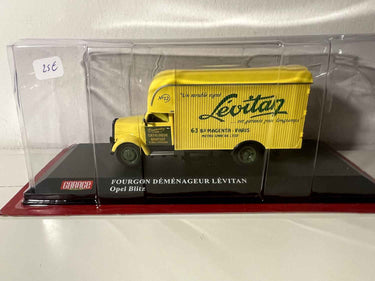


Model Car Opel Blitz yellow van mover Lévitan - Modern Garage Collection
Echelle: 1/43ème

Your payment information is processed securely.

Discover this remarkable diecast model car featuring the iconic Opel Blitz van in the unforgettable colors of French moving company Lévitan. This meticulously crafted miniature reproduction captures the essence of one of post-war Europe's most recognizable utility vehicles, showcasing the characteristic yellow livery that marked French streets throughout the decades of economic reconstruction.
This exceptional diecast model car represents far more than a simple collectible—it embodies a pivotal chapter in French commercial transport history. The Lévitan-branded Opel Blitz became an icon of the Thirty Glorious Years (Trente Glorieuses), a period when France experienced unprecedented economic growth and urban transformation. For collectors passionate about automotive heritage and industrial history, this scale model offers an authentic window into an era when utility vehicles were the lifeblood of European commerce.
Whether you're an experienced collector of collectible utility vehicles or beginning your journey into the fascinating world of commercial vehicle miniatures, this diecast model car serves as an essential addition. It perfectly testifies to a time when robust vans like the Opel Blitz formed the backbone of French commercial transport, delivering goods, facilitating moves, and connecting communities across the nation.
Technical Specifications of This Diecast Model Car
- Model: Opel Blitz van (utility configuration)
- Brand: Opel
- Era Represented: 1950s-1960s
- Scale: 1/43 - The classic collector's scale
- Livery: Lévitan Yellow with authentic company branding
- Protective display case included: Yes
- Material: High-quality die-cast metal construction
- Details: Precise reproduction of original markings and design elements
Understanding the 1/43 Scale for Diecast Model Cars
The 1/43 scale has long been considered the gold standard among diecast model car collectors worldwide. This scale offers an ideal balance between detail and display practicality, making it the preferred choice for enthusiasts who appreciate fine craftsmanship without requiring extensive storage space. At this scale, every miniature measures approximately one forty-third the size of the actual vehicle, resulting in models that typically measure between 9-12 centimeters in length.
What makes 1/43 scale diecast model cars particularly appealing is their ability to capture intricate details—from authentic paint finishes to precise lettering and company logos—while remaining affordable and space-efficient for collectors. This scale has been embraced by prestigious manufacturers for decades, establishing it as the standard for serious automotive miniature collections around the globe.
The Historical Significance of the Opel Blitz: A Revolutionary Utility Vehicle
The Opel Blitz emerged as early as 1930 from the German manufacturer's engineering departments, rapidly establishing itself as a benchmark in the light commercial vehicle segment. The name "Blitz" (meaning "lightning" in German) wasn't chosen arbitrarily—it reflected the vehicle's reputation for reliability and efficiency in an era when commercial transport was undergoing radical transformation.
This versatile van distinguished itself through its innovative modular construction, a groundbreaking approach that allowed various body configurations to be adapted according to the specific operational needs of diverse users. From panel vans for delivery services to specialized configurations for tradespeople, the Opel Blitz offered unprecedented flexibility. Its dependable engine, coupled with an optimized loading capacity, perfectly aligned with the demands of urban and peri-urban transport during the mid-20th century.
The commercial triumph of the Opel Blitz was nothing short of spectacular. With several hundred thousand units produced through the 1960s, this vehicle permanently shaped the European automotive landscape, establishing itself as an enduring symbol of post-war economic resurgence. For collectors of diecast model cars focused on commercial vehicles, the Opel Blitz represents an essential piece of transportation history—a vehicle that literally helped rebuild a continent.
Opel's Post-War Renaissance: A Brand in Service of Mobility
During the 1950s, Opel navigated a critical reconstruction period following the profound upheavals of World War II. The German manufacturer, operating under General Motors' ownership since 1929, strategically focused on diversifying its product range to recapture European markets. A key component of this strategy involved substantially developing its utility vehicle division, recognizing the continent's urgent need for reliable commercial transport.
Founded in 1862 by entrepreneur Adam Opel, the brand initially established itself in the manufacture of sewing machines—an unexpected origin for what would become one of Europe's leading automotive manufacturers. The company's transition to bicycle production in 1886 and subsequently to automobiles in the early 20th century demonstrated remarkable industrial adaptability. This century-spanning industrial expertise became clearly reflected in the superior quality of Opel's utility vehicles, positioning the brand as a trusted partner for European professionals seeking to modernize their commercial fleets during the reconstruction era.
Why Collect Commercial Vehicle Diecast Model Cars?
The market for commercial vehicle miniatures has experienced remarkable growth among diecast model car enthusiasts in recent years. Unlike sports cars or luxury automobiles that often dominate collector attention, commercial vehicles offer unique historical and cultural significance. These working vehicles tell stories of economic development, urban transformation, and the everyday heroes of commerce who kept societies functioning.
Collectors appreciate commercial vehicle diecast model cars for several compelling reasons. First, they represent authentic pieces of social history—vehicles that actually shaped daily life rather than merely providing entertainment or prestige. Second, their distinctive liveries and company branding create visually striking displays that spark conversations and memories. Third, commercial vehicle miniatures often appreciate in value more steadily than mass-produced passenger car models, particularly when they represent historically significant companies or discontinued brands.
For those building thematic collections, commercial vehicle diecast model cars offer exceptional versatility. You might focus on vehicles from a specific era (such as post-war reconstruction), collect by company (Lévitan, DHL, UPS), specialize in a particular vehicle type (delivery vans, moving trucks, service vehicles), or concentrate on vehicles from your local region. Each approach provides endless opportunities for discovery and specialization.
The Lévitan Phenomenon: When Moving Became a Spectacle
The story behind the bright yellow Lévitan trucks represents a fascinating chapter in French business history and popular culture. Founded in 1920, Lévitan didn't merely provide moving services—the company revolutionized an entire industry by adopting modern business practices and transforming its vehicles into mobile marketing masterpieces long before such strategies became commonplace.
The distinctive yellow color chosen by Lévitan wasn't selected on aesthetic grounds alone. This bold hue ensured maximum visibility on French streets, transforming every residential move into a spontaneous advertising campaign. This pioneering marketing approach proved extraordinarily effective, significantly contributing to the brand's recognition to such an extent that "calling Lévitan" became embedded in French vernacular as a synonym for moving house—much like "Hoover" became synonymous with vacuum cleaning in English-speaking countries.
The company's preference for Opel Blitz vans testified to the profound confidence professionals placed in this model during the reconstruction years. These vehicles proved ideally suited to France's unique urban constraints, particularly in Paris where narrow streets and limited access required compact yet capacious vehicles. The Opel Blitz delivered both requirements admirably, offering sufficient loading volume for residential moves while maintaining the maneuverability essential for navigating historic city centers.
This symbiotic relationship between Opel engineering and Lévitan's marketing genius permanently marked the French collective imagination. The yellow vans became inseparable from the urban landscape of the era, serving as highly visible symbols of a society experiencing profound transformation. As post-war France underwent rapid urbanization and economic expansion, residential mobility intensified dramatically—and Lévitan's distinctive fleet became the visual embodiment of this social evolution.
Today, this historical partnership makes the Lévitan-liveried Opel Blitz one of the most sought-after themes among collectors of French commercial vehicle diecast model cars. These miniatures don't merely replicate a vehicle—they encapsulate an entire era of French social and economic history.
Building Your Collection: Where This Diecast Model Car Belongs
This Opel Blitz Lévitan miniature occupies a distinctive position within the realm of collectible utility vehicles. Its historical significance and cultural resonance make it an anchor piece for various collecting themes and approaches.
For enthusiasts specializing in brand collections, this model integrates beautifully with other Opel miniatures, allowing you to trace the German manufacturer's commercial vehicle evolution throughout the 20th century. From early models to modern interpretations, Opel's utility vehicles demonstrate remarkable engineering progression and design innovation.
Those passionate about advertising history and branded vehicles will find this piece harmonizes perfectly with collections focused on iconic advertising vehicles of post-war France. Alongside delivery vans from other legendary French companies—from postal services to beverage distributors—the Lévitan Opel Blitz helps tell the story of how commercial fleets became moving billboards during the economic boom years.
Collectors concentrating on commercial transport will appreciate how this diecast model car complements other examples of light utility vehicles from the same period. Whether displayed alongside Citroën Type H vans, Renault Estafettes, or Volkswagen Type 2 transporters, this Opel Blitz represents the international diversity of Europe's commercial vehicle fleet during reconstruction.
From a chronological perspective, this model serves as an excellent cornerstone for collections devoted to the 1950s and the 1960s—decades that witnessed unprecedented transformation in European commerce, urban development, and consumer culture.
The Investment Value of Commercial Vehicle Diecast Model Cars
While the primary motivation for collecting should always remain passion and appreciation for automotive history, it's worth noting that commercial vehicle diecast model cars often demonstrate strong value retention and appreciation potential. Several factors contribute to this investment characteristic.
First, commercial vehicles from defunct companies or discontinued brands—such as Lévitan—possess inherent scarcity value. Once a company ceases operations, new miniatures bearing their livery become unlikely, making existing models increasingly sought-after by collectors. Second, the nostalgia factor associated with these working vehicles often intensifies over time as fewer people retain personal memories of seeing them on streets.
Third, the market for commercial vehicle miniatures remains relatively specialized compared to sports cars or luxury automobiles, meaning supply often lags behind collector demand. This supply-demand dynamic can support stable or appreciating values for well-preserved examples, particularly those retaining original packaging and documentation.
For collectors considering the investment dimension, several best practices apply. Maintain your diecast model cars in pristine condition, preferably in their original protective cases. Document provenance when possible, including manufacturer details and production information. Store miniatures away from direct sunlight, excessive humidity, or temperature fluctuations. Finally, focus on historically significant models rather than chasing every available variation—quality and meaning trump quantity in building collections with lasting value.
Displaying and Caring for Your Diecast Model Car Collection
Properly displaying and maintaining your diecast model cars ensures they remain in excellent condition while allowing you to fully appreciate their craftsmanship and historical significance. For 1/43 scale models like this Opel Blitz, several display options work particularly well.
Dedicated display cases with individual compartments protect each model from dust accumulation while allowing 360-degree viewing. Glass-fronted cabinets provide dust protection while showcasing your entire collection cohesively. Themed displays—grouping commercial vehicles by era, company, or vehicle type—create visually compelling presentations that tell historical narratives.
When maintaining your collection, handle models carefully by their base or chassis rather than delicate components like mirrors or antennas. For cleaning, use soft brushes or compressed air to remove dust—avoid harsh chemicals or abrasive materials that might damage paint or decals. If models include rubber tires, occasional treatment with specialized tire preservative prevents cracking or deterioration.
Environmental considerations matter significantly for long-term preservation. Avoid displaying diecast model cars in direct sunlight, which can fade paint and cause plastic components to become brittle. Maintain stable temperature and humidity levels—extreme fluctuations can damage both metal and plastic components over time. For particularly valuable or rare pieces, consider keeping the original packaging, as this significantly enhances collectibility and resale value.
Frequently Asked Questions About This Diecast Model Car
What makes the 1/43 scale ideal for collecting?
The 1/43 scale represents the perfect compromise for serious collectors. These models offer exceptional detail reproduction while remaining compact enough for practical display and storage. This scale has been industry-standard for premium diecast model cars since the mid-20th century, ensuring compatibility with most dedicated display cases and availability of diverse models from virtually every automotive era and manufacturer.
Is this diecast model car suitable for play or display only?
This Opel Blitz miniature is designed primarily as a collector's display piece rather than a toy. While constructed from durable die-cast metal, it features delicate components and detailed finishes best preserved through careful handling. The included protective case indicates its intended purpose as a display collectible. For younger enthusiasts interested in commercial vehicles, more robust play-oriented models might prove more appropriate.
How does this model compare to original manufacturer specifications?
Quality diecast model cars like this Opel Blitz strive for accuracy in proportions, colors, and details. Manufacturers typically work from original technical drawings, period photographs, and sometimes actual surviving vehicles to ensure authenticity. The Lévitan livery replicates the actual yellow shade and company branding used on real moving vans. However, some details may be simplified or modified for manufacturing practicality at this scale.
Can I remove the model from its protective case?
Yes, the protective case is designed for both display and access. You can carefully remove the model for closer examination or photography. However, the case serves an important preservation function by protecting against dust, accidental contact, and environmental factors. When handling the model outside its case, ensure clean hands and a soft surface to prevent scratches or damage.
What other models complement this Opel Blitz in a collection?
This model pairs beautifully with other French commercial vehicles from the same era, including Citroën HY vans, Renault Estafettes, and Peugeot D-series trucks. For Opel enthusiasts, consider adding different Blitz configurations or other Opel utility models. Collectors focusing on advertising vehicles might seek out miniatures representing other iconic French companies like Kronenbourg, Perrier, or La Poste. The key is selecting pieces that resonate with your particular collecting interests and display themes.
How should I clean and maintain this diecast model car?
For routine maintenance, use a soft, dry brush or compressed air to gently remove dust. Avoid water or cleaning solutions unless absolutely necessary, as these can damage decals or finishes. For stubborn dirt, slightly dampen a soft cloth with distilled water only—never use tap water, which may leave mineral deposits. After any cleaning, ensure the model is completely dry before returning it to its protective case. Regular dusting every few months prevents accumulation that becomes harder to remove over time.
The Cultural Legacy of Commercial Vehicle Design
Commercial vehicles like the Opel Blitz represent a fascinating intersection of functional engineering and cultural identity. Unlike passenger cars designed to reflect personal taste and social status, utility vehicles emerged from purely practical requirements—they needed to work reliably, efficiently, and economically. Yet paradoxically, these working vehicles often achieved iconic status that transcended their utilitarian origins.
The Lévitan-branded Opel Blitz exemplifies this phenomenon perfectly. What began as a pragmatic choice—selecting a dependable German-engineered van for moving services—evolved into a cultural touchstone instantly recognizable to generations of French citizens. The distinctive yellow livery transformed functional transport into mobile art, urban landmarks that punctuated street scenes and marked significant life transitions for families on moving day.
This cultural resonance explains why commercial vehicle diecast model cars captivate collectors so profoundly. These miniatures preserve memories not of automotive luxury or racing glory, but of everyday commerce, community connection, and economic vitality. They remind us that transportation history encompasses not just glamorous sports cars or prestigious limousines, but also the humble working vehicles that kept societies functioning, businesses operating, and economies growing.
Conclusion: More Than Just a Diecast Model Car
This Opel Blitz Lévitan miniature transcends its role as merely another diecast model car for your collection. It represents a tangible connection to France's reconstruction era, when yellow moving vans became symbols of prosperity, mobility, and social transformation. For collectors passionate about industrial heritage and automotive history, this piece offers authentic testimony to a time when utility vehicles actively shaped urban daily life and participated in European economic revival.
Whether you're an experienced collector of commercial vehicle miniatures or just discovering the fascinating world of utility vehicle diecast model cars, this Lévitan-liveried Opel Blitz deserves consideration as an anchor piece in your collection. Its historical significance, cultural resonance, and exceptional craftsmanship combine to create more than a replica—they create a storytelling artifact that bridges past and present, preserving automotive heritage for future generations to discover and appreciate.
Add this remarkable piece to your collection today and own a miniature embodiment of mid-20th century French commercial history—a time when bright yellow vans didn't merely transport belongings, but carried the aspirations of a nation rebuilding itself one move at a time.
Frequently Asked Questions
How to understand the scales of miniatures?
Scale indicates the reduction ratio between the real car and the miniature. For example, at 1:43 scale, each centimeter on the miniature corresponds to 43 centimeters on the real vehicle.
Concretely, a 1/18 scale Ferrari model is approximately 25-30 cm long, while in 1/43 scale it measures approximately 10 cm.
What scales are available?
Our model cars are mainly offered in 1/43, 1/24, 1/18 and 1/87 (HO) scales. The scale is always indicated in the product sheet.
The smaller the second number, the larger the model car (e.g. 1/18 is larger than 1/43).
Does the model car come with protection?
Yes, each model car is systematically delivered in its protective box. This box preserves the collectible value and protects your model car from dust and shocks.
How is my package protected during transport?
We package each order with the utmost care: bubble wrap, appropriate cushioning, and polystyrene. Your model car is perfectly secure during its journey.
What is the delivery time?
In-stock items are shipped within 24-48 hours. Please allow 2-3 business days for France via Colissimo or 4-5 days via Mondial Relay.
The model car is no longer in stock, when will you have it?
It's impossible for me to know exactly when I'll receive a new stock because I receive arrivals in dribs and drabs. Please contact me so I can keep you informed as soon as it's available.
What our customers say
Customer feedback and testimonials