


Le dernier exemplaire de cette miniature a ete vendu
Ces autres miniatures pourraient vous interesser
Même métier : commercial


Même origine : autres marques étrangères


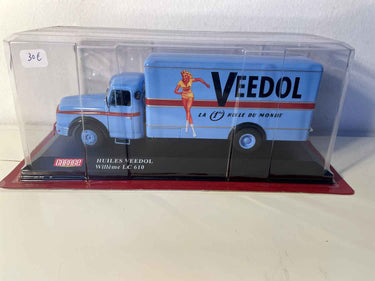


Model Car Willème LC 610 truck blue VEEDOL OILS - MODERN GARAGE collection
Echelle: 1/43ème

Your payment information is processed securely.

This magnificent diecast model car represents a Willème LC 610 truck in the colors of Veedol Oils, an iconic vehicle that embodies the entire history of French road transport from the 1960s-70s. This miniature replica is part of the prestigious Modern Garage collection and accurately captures the essence of an era when French truck drivers traveled the national roads, delivering goods across the Hexagon with pride and determination.
As a true collectible item, this scale model appeals to both heavy truck enthusiasts and fans of French industrial history, showcasing the excellence of French construction in utility vehicles. This die-cast collectible stands as a testament to the golden age of European commercial transport, when brands like Willème dominated the roads with their robust and reliable vehicles.
Technical Specifications of the Diecast Model Car
- Model: LC 610
- Brand: Willème
- Year: 1960s-70s
- Scale: 1/43
- Color: Blue with Veedol Oils colors
- Protective case included: Yes
- Material: Die-cast metal with plastic details
- Finish: Detailed paint application with authentic livery
This miniature replica has been crafted with exceptional attention to detail, from the authentic Veedol Oils branding to the characteristic features of the LC 610's cab design. The 1/43 scale format offers an ideal balance between display space and visible detail, making it a perfect centerpiece for any collection of commercial vehicle models.
The Willème LC 610: A Giant of the French Roads
The Willème LC 610 was developed in the 1960s to meet the growing needs of French road transport during the period known as the Trente Glorieuses (Glorious Thirty), when France experienced unprecedented economic growth and industrial expansion. This payload truck embodied the brand's philosophy: robustness, reliability, and adaptability to the demands of the French market.
With its characteristic forward cab design and functional engineering, the LC 610 represented a natural evolution of French trucks towards greater modernity. The forward control configuration, where the driver sat above or slightly ahead of the front axle, provided excellent visibility and maneuverability—essential qualities for navigating the narrow streets of French villages and the busy urban centers that were rapidly expanding during this era.
Equipped with powerful diesel engines for its time and a transmission suited to the varied terrains of France—from the flat plains of the North to the mountainous regions of the Alps and Pyrenees—this model stood out for its high payload capacity and remarkable maneuverability. The carefully crafted finishes and the cabin's ergonomics made it a favored companion for professional truck drivers who spent long hours behind the wheel.
Engineering Excellence and Innovation
The commercial success of the LC 610 can be attributed to its exceptional versatility, enabling both long-distance transport across national routes and urban deliveries in congested city centers. This adaptability contributed significantly to the economic development of France during the Glorious Thirties, facilitating the movement of goods that fueled the country's industrial boom.
The truck's design incorporated several innovative features for its era, including an accessible engine compartment for easier maintenance, a spacious cargo bed that could be configured for various types of loads, and a suspension system that balanced load-carrying capacity with driver comfort. These engineering solutions made the LC 610 a practical choice for fleet operators and independent carriers alike.
Willème: The Excellence of French Heavy Transport Manufacturing
At the creation of the LC 610, Willème enjoyed an exceptional reputation in the world of French heavy trucks. The company, based in Nanterre in the western suburbs of Paris, was known for its technical innovations and its ability to offer vehicles perfectly suited to the specific needs of the French market and the demands of European transport operators.
Founded in 1904 by Jules Willème, this French brand quickly established itself as an indispensable reference in heavy transport. A pioneer in many fields, the company developed innovative technical solutions that marked the French automotive industry and influenced truck design across Europe. From the first steam-powered trucks to the most sophisticated diesel models, Willème continuously adapted to technological advances and changing regulatory requirements.
A Legacy of Industrial Innovation
The history of the Willème brand is intimately intertwined with the development of road transport in France throughout the 20th century. Willème equipped large industrial companies, public services including postal and municipal fleets, and independent carriers, actively participating in the modernization of the French economy. The company's vehicles were renowned for their durability—many Willème trucks remained in service for decades, a testament to the quality of their construction.
Willème also played a crucial role in the development of specialized vehicles, including dump trucks for construction, tankers for liquid transport, and refrigerated vehicles for the food industry. This diversification demonstrated the brand's technical expertise and its ability to meet the evolving needs of different industrial sectors.
The Adventure of Veedol Oils on the Roads of France
Trucks in the distinctive colors of Veedol Oils were a familiar and eye-catching sight on French roads throughout the 1960s and 1970s. This lubricant brand, a subsidiary of the American oil company Tidewater Oil Company, had developed a particularly visible marketing strategy centered on its brightly colored delivery vehicles that served as mobile advertisements across the French landscape.
The partnership between Willème and Veedol perfectly illustrated the rise of consumer society in post-war France. These trucks, serving as true mobile ambassadors of the brand, traveled across the Hexagon to supply garages, service stations, car dealerships, and industrial clients with high-quality motor oils and lubricants. Their presence on the roads was a testament to the democratization of the automobile and the explosion of the French car fleet during the economic boom years.
The Elite of French Truck Drivers
Drivers of these Veedol vehicles often received specialized training in both vehicle operation and customer service, representing the elite of professional truck drivers. They embodied a certain modernity and professionalism, conveying the image of a France that was rapidly motorizing and embracing technological progress. Their Willème trucks, always perfectly maintained and impeccably presented, contributed to forging the legend of French truck drivers—the "lords of the road" celebrated in popular songs and films of the time.
This era also marks the peak of commercial relationships between French manufacturers and fuel distributors, a fruitful collaboration that contributed to the prominence of the automotive industry and helped establish France as a major player in European commercial transport. The distinctive liveries of companies like Veedol became part of the visual landscape of France's modernization.
Why This Diecast Model Car Belongs in Your Collection
This Willème LC 610 scale model holds a key position in the world of heavy truck collectors and represents an essential piece for anyone interested in French automotive heritage. The attention to detail in this miniature replica, from the accurate color scheme to the proportions of the cab and cargo bed, makes it a standout piece that captures the spirit of an important era in transport history.
Perfect Complement to Existing Collections
This diecast model car fits perfectly with collections dedicated to French automotive heritage and ideally complements series dedicated to Willème vehicles or French heavy trucks. Its unique Veedol Oils livery adds a commercial vehicle dimension that enriches any collection focused on working trucks and industrial transport.
Industrial history enthusiasts will particularly appreciate this model, as it harmoniously dialogues with other utility vehicle miniatures from the same era. It also finds its natural place alongside thematic collections dedicated to advertising vehicles or to the 1960s, helping to recreate the atmosphere of this transformative period in French history.
Accessible to All Collector Levels
This piece is suitable for both experienced collectors seeking rare commercial vehicle models and newcomers eager to discover the history of French road transport. It serves as an excellent introduction to French collections and 1/43 scale miniatures, showcasing the richness and diversity of Hexagonal automotive heritage.
The included protective case ensures that your investment remains in pristine condition, protecting the model from dust and handling while allowing full visibility of its detailed features. This makes it ideal for display in cabinet collections or on office shelves where it can be admired daily.
Understanding the Collectible Value of Commercial Vehicle Models
The market for commercial vehicle die-cast collectibles has grown significantly in recent years, with collectors increasingly recognizing the historical and cultural importance of trucks, buses, and utility vehicles. Unlike passenger car models, which are abundantly produced, accurate scale models of working vehicles like the Willème LC 610 are relatively rare, making them particularly sought-after by discerning collectors.
Investment Potential and Rarity
Models featuring specific company liveries, such as this Veedol Oils version, tend to appreciate in value over time due to their limited production runs and their appeal to both vehicle collectors and those interested in commercial brand history. This dual appeal creates a broader market for such pieces, potentially enhancing their long-term collectible value.
The 1/43 scale has become the standard for serious collectors of European vehicles, offering an optimal balance between detail and displayability. This scale allows for accurate reproduction of distinctive features while remaining manageable for collection storage and presentation. Many collectors focus exclusively on 1/43 models, creating a robust secondary market for quality pieces.
Displaying and Caring for Your Diecast Model Car
Proper display and maintenance of your miniature replicas ensure they retain their beauty and value for years to come. Here are essential tips for preserving this scale model and other pieces in your collection:
Display Best Practices
Position your models away from direct sunlight, which can fade paint finishes over time, particularly on darker colors. The UV protection offered by quality display cases provides an additional layer of defense against light damage. Maintain a stable temperature and humidity level in your display area to prevent paint deterioration and metal oxidation.
Arrange your collection thematically or chronologically to tell a visual story. Grouping commercial vehicles together, organizing by manufacturer, or creating period-specific displays can enhance the overall impact of your collection and make it more meaningful to visitors.
Maintenance and Handling
When handling your diecast model cars, always hold them by the chassis or base rather than by delicate parts like mirrors, antennas, or cargo bed accessories. Use a soft brush or compressed air to remove dust, avoiding chemical cleaners that might damage paint or decals. The protective case provided with this model should be used whenever the piece is not on display.
Periodically inspect your collection for signs of "metal fatigue" or "zinc pest," a deterioration that can affect older die-cast models. While modern manufacturing techniques have largely eliminated this issue, vigilance ensures early detection if problems occur.
The Art of Scale Model Production
Understanding how these diecast model cars are produced enhances appreciation for the craftsmanship involved. The manufacturing process combines traditional die-casting techniques with modern precision engineering to create miniature replicas that faithfully reproduce every detail of the original vehicle.
Die-Casting Process
The term "die-cast" refers to the metal casting process where molten metal—typically a zinc alloy called Zamak—is forced under high pressure into steel molds. This process allows for exceptional detail reproduction, capturing fine elements like door handles, grille patterns, and panel lines that define the vehicle's character.
After casting, each piece undergoes multiple stages of finishing, including polishing, painting, and the application of decals or tampo-printed details. The Veedol Oils livery on this model required precise color matching and careful application to recreate the authentic appearance of these historic commercial vehicles.
Frequently Asked Questions About This Collectible
Is this model suitable for children to play with?
While the model is durably constructed, it is designed primarily as a collectible display piece for adults and older children. The detailed parts and paint finish are best preserved when the model is handled carefully and kept in its protective case when not being displayed. For younger enthusiasts, it can serve as an educational tool when supervised, helping them learn about transport history and engineering.
What makes the Willème LC 610 historically significant?
The LC 610 represents an important period in French industrial development when domestic manufacturers like Willème competed successfully with international brands. These trucks were instrumental in the economic modernization of France, moving goods that fueled industrial growth and connected rural producers with urban markets. The model captures a snapshot of this transformative era in French history.
Can I find other Willème models to complete a series?
Yes, several manufacturers have produced Willème models in various scales and configurations. Exploring specialized Willème vehicle collections will reveal different truck types, including construction vehicles, long-distance haulers, and various liveries representing different companies that operated these reliable French trucks.
How does this model compare to other 1/43 scale trucks?
The 1/43 scale offers an excellent compromise between detail and size, allowing collectors to build substantial collections without requiring excessive display space. This scale has become the international standard for model vehicles in Europe, ensuring compatibility with other models and availability of display accessories designed specifically for this size.
Building a Thematic Collection Around Commercial Vehicles
This Willème LC 610 can serve as the cornerstone for a themed collection exploring various aspects of commercial transport history. Consider these approaches to developing a cohesive and meaningful collection:
By Era and Industrial Development
Focus on vehicles from the 1960s-70s period of French economic expansion, including models from manufacturers like Berliet, Saviem, and Unic alongside your Willème pieces. This approach tells the story of France's post-war industrial boom through the vehicles that made it possible.
By Brand and Livery
Collect vehicles featuring specific company liveries like Veedol Oils, Shell, Esso, or Air Liquide. These branded models document the evolution of corporate identity and commercial vehicle design, creating a fascinating intersection of transport and business history.
By Vehicle Type and Function
Assemble models representing different commercial vehicle categories—delivery vans, flatbed trucks, tankers, and refrigerated vehicles—to illustrate the diversity of transport solutions developed to meet various industrial needs. This functional approach highlights engineering innovation and specialization.
Resources for Diecast Model Car Collectors
Connecting with the broader collecting community enhances your enjoyment and knowledge of these miniature masterpieces. Several organizations and resources cater specifically to scale model enthusiasts.
The Toy and Model Collectors Club in the United Kingdom brings together enthusiasts interested in various types of model vehicles, offering publications, events, and networking opportunities. Their resources include identification guides and valuation information valuable to collectors at all levels.
For those interested in the broader history of French automotive manufacturing, the Musée Automobile de Rouen (Rouen Automobile Museum) houses an impressive collection of French vehicles, including commercial trucks from manufacturers like Willème. Visiting such institutions provides context and inspiration for your collecting journey.
Online communities and specialized forums offer platforms for sharing collection photos, trading information about rare models, and connecting with fellow enthusiasts worldwide. These digital spaces have become invaluable resources for identifying models, researching production variations, and staying informed about new releases.
Conclusion: A Window Into French Industrial Heritage
This Willème LC 610 diecast model car in Veedol Oils livery represents far more than a simple toy or decoration. It embodies a significant chapter in French industrial and transport history, capturing the spirit of an era when domestic manufacturers built robust vehicles that powered economic growth and connected communities across the nation.
Whether you're an experienced collector seeking to fill a gap in your commercial vehicle series or a newcomer drawn to the aesthetic appeal and historical significance of French trucks, this miniature replica offers exceptional value. Its detailed construction, accurate livery, and protective case make it a worthy addition to any collection focused on automotive heritage, French industrial history, or the evolution of commercial transport.
As interest in commercial vehicle models continues to grow among collectors worldwide, pieces like this Willème LC 610 gain both historical and monetary value. They serve as tangible connections to a past when craftsmanship, reliability, and national pride drove the development of vehicles that literally moved France forward into its modern era.
Add this distinctive piece to your collection today and own a fragment of the road transport legacy that helped shape contemporary France.
Frequently Asked Questions
How to understand the scales of miniatures?
Scale indicates the reduction ratio between the real car and the miniature. For example, at 1:43 scale, each centimeter on the miniature corresponds to 43 centimeters on the real vehicle.
Concretely, a 1/18 scale Ferrari model is approximately 25-30 cm long, while in 1/43 scale it measures approximately 10 cm.
What scales are available?
Our model cars are mainly offered in 1/43, 1/24, 1/18 and 1/87 (HO) scales. The scale is always indicated in the product sheet.
The smaller the second number, the larger the model car (e.g. 1/18 is larger than 1/43).
Does the model car come with protection?
Yes, each model car is systematically delivered in its protective box. This box preserves the collectible value and protects your model car from dust and shocks.
How is my package protected during transport?
We package each order with the utmost care: bubble wrap, appropriate cushioning, and polystyrene. Your model car is perfectly secure during its journey.
What is the delivery time?
In-stock items are shipped within 24-48 hours. Please allow 2-3 business days for France via Colissimo or 4-5 days via Mondial Relay.
The model car is no longer in stock, when will you have it?
It's impossible for me to know exactly when I'll receive a new stock because I receive arrivals in dribs and drabs. Please contact me so I can keep you informed as soon as it's available.
What our customers say
Customer feedback and testimonials