


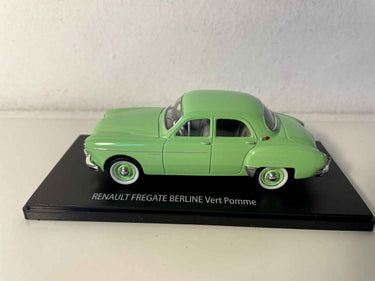


Model Car Renault Frégate Green Apple Sedan - ELIGOR reference 100957
Echelle: 1/43ème

Your payment information is processed securely.


Chargement de vos recommandations...
This Renault Frégate Sedan miniature faithfully reproduces one of the most iconic French cars of the post-war era. As a premium diecast model car, this ELIGOR reproduction in its original green apple livery captures all the elegance of the sedan that marked the 1950s with its innovative design and ambitious conception. For collectors seeking an authentic piece of French automotive history, this scale model represents exceptional craftsmanship and historical accuracy.
A true collectible item, this diecast model car is aimed at enthusiasts of French automobiles and collectors who value historical authenticity. It bears witness to a time when Renault dared to challenge the established codes of the automotive industry, making it a meaningful addition to any serious collection of miniature vehicles.
Technical Specifications of This Diecast Model Car
- Model: Renault Frégate Sedan
- Brand: Renault
- Production Period: 1951-1960
- Scale: 1/43 precision replica
- Color: Green apple (authentic original livery)
- Manufacturer: ELIGOR
- Reference Number: 100957
- Protective Display Case: Included for preservation
- Material: High-quality die-cast metal with detailed components
- Recommended For: Adult collectors and automotive enthusiasts
The Fascinating History of the Renault Frégate
Launched in 1951, the Renault Frégate arose from Pierre Lefaucheux's ambitious vision to equip Renault with a high-end sedan capable of competing with American productions. This remarkable vehicle represented a bold departure for the French manufacturer, introducing styling cues and features previously unseen in European automotive design. Its design, inspired by cars from across the Atlantic, stands in stark contrast to the European productions of the time with its generous lines and chrome grille, making it instantly recognizable on French roads.
The Frégate's development marked a turning point in Renault's post-war strategy. Engineers and designers worked tirelessly to create a vehicle that would embody French luxury while incorporating American comfort standards. The result was a sedan that perfectly balanced European sophistication with transatlantic practicality, establishing new benchmarks for French automotive engineering.
Technically innovative for its era, the Frégate debuted automatic transmission technology at Renault and featured a robust 2.1-liter four-cylinder engine developing 58 horsepower. While this might seem modest by today's standards, it represented cutting-edge performance for the early 1950s. Its spacious cabin and comfortable ride quickly made it the preferred choice of liberal professions and French administrations, particularly appreciated for its road qualities on long journeys across France and its territories.
The sedan's interior design prioritized comfort and practicality, with generous legroom and thoughtful amenities that catered to professional users and families alike. Its suspension system, advanced for the period, provided a smooth ride that made extended travel considerably more pleasant than competing models.
Despite its undeniable qualities and technological innovations, the Frégate achieved only mixed commercial success with approximately 163,000 units produced by 1960. Its positioning in the premium segment meant higher pricing, and significant fuel consumption limited its diffusion among cost-conscious French consumers. However, it remains in automotive memory as a symbol of an audacious and visionary Renault, representing the company's willingness to take bold risks and push boundaries in pursuit of excellence.
Why This Diecast Model Car Belongs in Your Collection
This 1/43 scale diecast model car from ELIGOR represents more than just a miniature replica—it's a portal to understanding French automotive innovation during a pivotal decade. The attention to detail in this collectible scale model makes it an essential piece for enthusiasts who appreciate the nuances of post-war European car design. From the accurate reproduction of the distinctive chrome grille to the faithful rendering of the green apple paintwork, every element has been carefully researched and executed.
ELIGOR's reputation for producing historically accurate miniature vehicles is well-deserved, and this Renault Frégate exemplifies their commitment to quality. The manufacturer has painstakingly recreated the proportions, details, and character of the original sedan, ensuring that collectors receive a piece worthy of display alongside the finest die-cast collectibles. The included protective case not only preserves the model's condition but also enhances its presentation, allowing you to showcase this beautiful replica with pride.
For collectors specializing in French automotive history, this diecast model car fills a crucial gap in representing the ambitious yet underappreciated vehicles that shaped the nation's motoring landscape. The Frégate's story of innovation, ambition, and the complexities of market acceptance provides rich context for discussion and appreciation among fellow enthusiasts.
Renault's Bold Vision in the 1950s
At the time of the Frégate's launch, Renault was undergoing a period of intense reconstruction following the nationalization of 1945. Under Pierre Lefaucheux's visionary leadership, the public company developed an ambitious strategy to modernize the French automotive industry and conquer new markets both domestically and internationally. This era represented a fundamental transformation in how French manufacturers approached vehicle design and production.
The company invested heavily in new manufacturing facilities and production techniques, embracing modern assembly methods that would allow for increased output while maintaining quality standards. This industrial modernization positioned Renault as a leader among European automakers and set the stage for decades of success.
This decade marked the golden age of Renault innovation with the phenomenal success of the 4CV, launched in 1947, which democratized the automobile in France. While the 4CV targeted mass-market consumers, the Frégate aimed at a more exclusive clientele, demonstrating Renault's ability to serve multiple market segments simultaneously. Simultaneously, the diamond brand invested heavily in research and development, creating avant-garde vehicles like the Frégate or the Estafette.
This period of creative effervescence laid the foundations for Renault's future international success, particularly with its expansion into the emerging markets of the 1950s. The lessons learned from the Frégate's development—both its successes and challenges—informed subsequent models and helped shape Renault's approach to product development for generations to come.
A Prestige Sedan with Unique Destinies
The Renault Frégate has marked history through its prestigious and sometimes unexpected uses, making it a fascinating subject for diecast model car collectors who appreciate vehicles with compelling stories. Adopted by the Élysée as an official vehicle, it regularly transported President René Coty during his travels, helping to forge his image as a French presidential sedan. This institutional recognition contrasts with its sometimes lukewarm reception by the general public, adding layers of historical complexity to the vehicle's legacy.
The sight of a Frégate with presidential insignia became synonymous with French governmental authority during the mid-1950s, appearing in newsreels and photographs that documented the nation's political life. This association with power and prestige elevated the model's status, even as sales figures remained modest.
Overseas, the Frégate had a particular destiny in North Africa and the French colonies, where its robustness and comfort made it the preferred mount of high colonial officials. In Algeria in particular, many units served in the local administration, crossing the Sahara and demonstrating their reliability under extreme conditions. These vehicles faced scorching temperatures, dusty environments, and challenging terrain, yet proved surprisingly durable and dependable.
French administrators stationed in remote colonial outposts came to appreciate the Frégate's spacious interior during long journeys between cities, while its mechanical simplicity allowed for repairs in locations far from specialized service centers. These working vehicles accumulated hundreds of thousands of kilometers, proving the fundamental soundness of Renault's engineering even when the market failed to embrace the model.
Paradoxically, this "too French" sedan for the domestic market finds its most fervent admirers abroad today. American collectors seek it out for its atypical European style, appreciating the unique design language that blends American influences with French sensibilities. In South America, a few exported units from that era have become museum pieces that testify to the golden age of the French automotive industry, preserved as examples of mid-century European automotive ambition.
This late recognition underscores the visionary nature of a model misunderstood in its time, which perfectly embodies the creative audacity of a Renault in full industrial and social transformation. For diecast model car enthusiasts, this historical context adds tremendous depth to the appreciation of this ELIGOR miniature, transforming it from a simple replica into a conversation piece rich with historical significance.
Building a Distinguished Collection of French Diecast Model Cars
This Renault Frégate ELIGOR diecast model car holds a place of choice in the world of French automotive miniatures. For serious collectors of scale model vehicles, it represents an essential piece that documents an important chapter in French automotive history. It fits perfectly into collections dedicated to exceptional French sedans and harmoniously dialogues with other iconic models of the era such as the Citroën DS or the Peugeot 403.
When displayed alongside these contemporaneous models, the Frégate helps tell the broader story of French automotive ambition during the 1950s. Each vehicle represented different approaches to post-war reconstruction and modernization, with the DS embodying radical futurism, the 403 representing reliable practicality, and the Frégate attempting to bridge European and American design philosophies.
Passionate collectors of French automobiles will find this diecast model car a perfect addition to the ELIGOR ranges, known throughout the collecting community for their historical accuracy and meticulous finishing. ELIGOR has built a reputation for producing miniature vehicles that respect the proportions, details, and character of original automobiles, making their models highly sought after by discerning enthusiasts.
This miniature particularly appeals to enthusiasts of vehicles from the 1950s-1960s, a flourishing period of automotive creativity when manufacturers experimented with new technologies, design languages, and market strategies. Collectors who focus on this era appreciate the diversity of approaches and the historical context that informed each vehicle's development.
Beyond simple collectors, this green apple Frégate will charm enthusiasts of French social history, serving as a miniaturized testimony of an era when the French automotive industry dared to compete with the greatest global productions. It naturally finds its place alongside other ELIGOR creations, a guarantee of quality and historical authenticity that serious collectors have come to trust and value.
Understanding Diecast Model Car Collecting: A Comprehensive Guide
Collecting diecast model cars has evolved from a childhood hobby into a sophisticated pursuit enjoyed by adults worldwide. The market for quality miniature vehicles has experienced significant growth, with collectors appreciating these pieces as both artistic representations and investment-worthy collectibles. Understanding what makes certain models valuable helps enthusiasts make informed decisions when building their collections.
Several factors contribute to a diecast model car's desirability and value. Rarity stands paramount—limited production runs, special editions, and discontinued models typically command premium prices in the secondary market. Manufacturer reputation matters significantly, with established brands like ELIGOR, AUTOart, and Minichamps recognized for superior craftsmanship and attention to detail.
Historical significance also plays a crucial role in determining a miniature vehicle's appeal. Models representing important automotive milestones, iconic designs, or historically significant vehicles often attract dedicated collectors willing to pay premiums. The Renault Frégate exemplifies this principle, representing an ambitious attempt by a major manufacturer to redefine French automotive luxury.
Condition remains critical for serious collectors. Pristine models in original packaging with all documentation maintain higher values than opened or displayed pieces. However, the joy of collecting often involves balancing investment considerations with the pleasure of viewing and appreciating these miniature masterpieces.
Caring for Your Diecast Model Car Collection
Proper care ensures your diecast model cars maintain their condition and value over time. Display cases protect miniatures from dust accumulation, which can settle into fine details and prove difficult to remove. The protective case included with this ELIGOR Renault Frégate serves this purpose admirably, but collectors with extensive collections may want to invest in purpose-built display furniture.
Environmental factors significantly impact die-cast metal models. Excessive humidity can promote corrosion, particularly on chrome-plated components and unpainted metal surfaces. Conversely, very dry conditions may cause adhesive bonds to weaken over time. Maintaining stable temperature and humidity levels protects your investment while preserving the aesthetic qualities that make these miniatures appealing.
Direct sunlight poses another threat, potentially fading paint finishes and discoloring plastic components over extended exposure. Positioning your display away from windows or using UV-filtering glass helps mitigate this risk. Many serious collectors dedicate specific rooms or spaces to their miniature vehicles, controlling environmental conditions to museum-quality standards.
Handling diecast model cars requires care and attention. Always grasp models by their chassis or base rather than delicate protruding elements like mirrors, antennae, or door handles. Clean hands prevent transfer of oils and acids that can gradually degrade finishes. For cleaning, gentle dusting with soft brushes designed for model care proves most effective.
The Investment Potential of Collectible Diecast Model Cars
While most collectors pursue their passion primarily for enjoyment, diecast model cars can appreciate significantly over time, particularly rare or limited-edition pieces. The collectibles market has demonstrated consistent interest in quality miniature vehicles, with certain models achieving impressive returns. However, approaching collecting purely as investment carries risks and may diminish the fundamental pleasure these pieces provide.
Models from respected manufacturers like ELIGOR tend to maintain value better than mass-market pieces, thanks to superior construction quality and limited production numbers. The Renault Frégate's relatively modest production run as a collectible (compared to more popular subjects like Ferraris or Porsches) may work in its favor for long-term value appreciation, particularly as interest in French automotive history grows.
Documentation plays a crucial role in maintaining and proving value. Original packaging, certificates of authenticity, and manufacturer information should be preserved carefully. Some collectors maintain detailed inventories including purchase prices, dates, and condition notes—information that proves valuable for insurance purposes and potential future sales.
Market trends in diecast model car collecting show increasing appreciation for well-documented automotive history. As the original vehicles become rarer and more expensive, quality miniature replicas allow enthusiasts to own representations of significant automobiles. Models like this ELIGOR Renault Frégate, which document important but often overlooked vehicles, may see increasing interest as collectors seek to complete comprehensive representations of automotive evolution.
Frequently Asked Questions About This Diecast Model Car
What makes the ELIGOR Renault Frégate special among diecast model cars?
This miniature stands out for its historical significance and exceptional craftsmanship. ELIGOR has faithfully reproduced a relatively rare subject in French automotive history—the ambitious Frégate sedan that represented Renault's attempt to compete in the premium market segment. The 1/43 scale allows for impressive detail while remaining displayable, and the green apple livery represents an authentic period color scheme. The included protective case demonstrates the manufacturer's understanding of collectors' needs for preservation and presentation.
Is this scale model suitable for children or primarily for adult collectors?
While constructed from durable die-cast metal, this diecast model car is designed and marketed primarily for adult collectors and enthusiasts. The intricate details, historical significance, and collectible nature make it most appropriate for mature hobbyists who will appreciate its context and handle it with appropriate care. The 1/43 scale includes small components that might present hazards for young children, and the collectible value suggests it's best suited for dedicated collections rather than play purposes.
How does the 1/43 scale compare to other popular diecast model car scales?
The 1/43 scale represents a popular middle ground in miniature vehicle collecting. Larger than the common 1/64 scale (typical of mass-market toy cars) but smaller than premium 1/18 scale models, 1/43 allows for significant detail while remaining space-efficient for display. A 1/43 scale Renault Frégate measures approximately 10-11 centimeters in length, making it substantial enough to showcase detailed features while allowing collectors to amass comprehensive collections without requiring excessive display space.
Will this diecast model car appreciate in value over time?
While no investment guarantees exist, several factors suggest potential for value appreciation. ELIGOR produces limited quantities of their models, and the Renault Frégate represents a historically significant vehicle that's underrepresented in collections. As the original automobiles become rarer and interest in French automotive history grows, quality miniature replicas may see increasing demand. Maintaining the model in pristine condition with original packaging optimizes potential future value, though most collectors find the primary reward lies in the enjoyment and historical connection these pieces provide.
How should I display and care for this collectible scale model?
The included protective case provides excellent display and preservation capabilities. Position your diecast model car away from direct sunlight to prevent paint fading, and maintain stable environmental conditions avoiding extreme temperature or humidity fluctuations. Handle the model minimally and always by its chassis when necessary. Dust gently with soft brushes designed for model care. If displaying multiple models together, ensure adequate spacing to prevent contact that might cause paint transfer or damage to delicate components.
What other French diecast model cars complement the Renault Frégate in a collection?
The Frégate pairs beautifully with other French sedans from the 1950s era. Consider adding a Citroën DS to represent radical design innovation, a Peugeot 403 for reliable middle-class transportation, or a Simca Aronde for context about competing manufacturers. Other Renault models from the period, such as the 4CV or Dauphine, help tell the complete story of the diamond brand's post-war evolution. ELIGOR produces many French vehicles from this golden era, allowing you to build a comprehensive collection representing France's automotive renaissance.
The Cultural Significance of French Automotive Design in Miniature
Collecting diecast model cars of French origin provides insight into a unique approach to automotive design that distinguished itself from both German precision and American flamboyance. French manufacturers during the 1950s pursued their own path, balancing practicality with innovation, creating vehicles that reflected France's cultural values and economic realities.
The Renault Frégate embodies this distinctly French approach—ambitious yet practical, comfortable yet efficient, European yet influenced by American trends. Owning a precision miniature replica allows collectors to study and appreciate these design philosophies in detail, examining proportions, styling cues, and engineering solutions that made French cars distinctive.
For international collectors, French miniature vehicles offer refreshing variety compared to the better-known Italian exotics or German sports cars. They tell stories of a different automotive culture, one that prioritized comfort and practicality alongside performance, and that wasn't afraid to experiment with unconventional solutions.
Conclusion: A Diecast Model Car That Tells a Compelling Story
This ELIGOR Renault Frégate diecast model car represents far more than a simple miniature vehicle—it's a carefully crafted tribute to French automotive ambition during a transformative period. For collectors who appreciate vehicles with complex histories, bold visions that exceeded their initial commercial success, and distinctive design languages that defied easy categorization, this green apple sedan offers tremendous satisfaction.
Whether you're building a comprehensive collection of French automobiles, focusing on 1950s vehicles, or simply appreciate well-crafted miniature replicas with fascinating backstories, this ELIGOR model deserves serious consideration. Its combination of historical significance, manufacturing quality, and relative rarity makes it a worthy addition to any serious collection of scale model vehicles.
The included protective case, accurate detailing, and 1/43 scale proportions ensure this diecast model car will provide years of enjoyment while potentially appreciating in value. Most importantly, it serves as a tangible connection to an era when French manufacturers dared to dream big, creating vehicles that pushed boundaries even when markets proved resistant to innovation.
Même marque : Renault


Même origine : française


Frequently Asked Questions
How to understand the scales of miniatures?
Scale indicates the reduction ratio between the real car and the miniature. For example, at 1:43 scale, each centimeter on the miniature corresponds to 43 centimeters on the real vehicle.
Concretely, a 1/18 scale Ferrari model is approximately 25-30 cm long, while in 1/43 scale it measures approximately 10 cm.
What scales are available?
Our model cars are mainly offered in 1/43, 1/24, 1/18 and 1/87 (HO) scales. The scale is always indicated in the product sheet.
The smaller the second number, the larger the model car (e.g. 1/18 is larger than 1/43).
Does the model car come with protection?
Yes, each model car is systematically delivered in its protective box. This box preserves the collectible value and protects your model car from dust and shocks.
How is my package protected during transport?
We package each order with the utmost care: bubble wrap, appropriate cushioning, and polystyrene. Your model car is perfectly secure during its journey.
What is the delivery time?
In-stock items are shipped within 24-48 hours. Please allow 2-3 business days for France via Colissimo or 4-5 days via Mondial Relay.
The model car is no longer in stock, when will you have it?
It's impossible for me to know exactly when I'll receive a new stock because I receive arrivals in dribs and drabs. Please contact me so I can keep you informed as soon as it's available.
What our customers say
Customer feedback and testimonials