


Le dernier exemplaire de cette miniature a ete vendu
Ces autres miniatures pourraient vous interesser
Même compétition : rallye


Même marque : Lancia


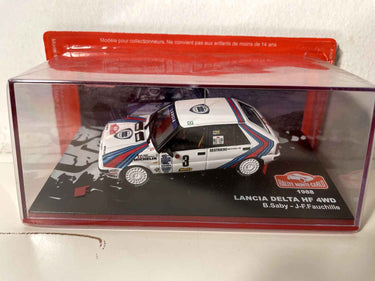


Model Car Lancia Delta HF 4WD white, blue and red number 3 (1988 Monte-Carlo Rally)
Echelle: 1/43ème
Pilotes: B. Saby / J.F. Fauchille

Your payment information is processed securely.
)
This Lancia Delta HF 4WD diecast model car takes us straight into the electrifying atmosphere of the 1988 Monte-Carlo Rally. Sporting its French patriotic colors and number 3, this meticulously crafted diecast model car immortalizes one of the most remarkable participations of the duo Bruno Saby and Jean-François Fauchille on the winding roads of the Principality. As a faithful reproduction of this legendary rally machine, this miniature represents the pinnacle of what diecast model car collectors seek: historical accuracy, exceptional detail, and the spirit of motorsport's golden era.
Genuine collector's item for rally and Italian car enthusiasts, this faithful reproduction captures all the sporting essence of one of the most iconic rally cars of the 80s. Whether you're an experienced collector of diecast model cars or just beginning your journey into miniature replicas, this scale model embodies the technical excellence and racing heritage that makes rally collectibles so desirable.
Diecast Model Car Features and Specifications
- Model: Lancia Delta HF 4WD
- Brand: Lancia
- Year: 1988
- Scale: 1/43
- Color: White with blue and red decorations
- Number: 3
- Crew: B. Saby / J.F. Fauchille
- Protective case included: Yes
The Lancia Delta HF 4WD: Technical Revolution on Asphalt
The Lancia Delta HF 4WD was born in 1987 amid the excitement of Group A rallying, marking Lancia's entry into the era of all-wheel drive. Developed specifically to dominate the specials of the World Rally Championship, it is the natural evolution of the Delta HF Turbo, integrating a revolutionary four-wheel drive system for its time. This diecast model car perfectly captures the aggressive stance and purposeful design that made the Delta a rally icon.
Under its hood beats a 1.8-liter turbocharged engine producing around 250 horsepower in competition version, coupled with a sophisticated all-wheel drive system that distributes power according to grip conditions. This technical configuration allows the Delta to excel on both snow and asphalt, making it a formidable weapon on all terrains of the world championship. For collectors of rally diecast model cars, understanding this technical prowess adds depth to the appreciation of these miniature replicas.
Success did not take long to come: by 1988, the Delta HF 4WD established itself as one of the absolute references of international rallying, paving the way for the legendary Delta Integrale dynasty that would dominate the discipline for many years. This historical significance makes diecast model cars representing the Delta HF 4WD particularly valuable among motorsport enthusiasts and collectors worldwide.
Why Collect Rally Diecast Model Cars?
The world of diecast model car collecting has experienced remarkable growth, with the global market valued at over $4 billion in 2025 and projected to reach $6 billion by 2035. Rally car miniatures represent a particularly passionate segment of this market, appealing to collectors who appreciate the combination of automotive engineering, sporting history, and artisanal craftsmanship. Adult collectors now account for approximately 60% of all diecast model car purchases, driven by nostalgia, investment interest, and the desire to own tangible pieces of motorsport history.
Rally diecast model cars offer unique advantages for collectors. Unlike their road-going counterparts, rally cars feature distinctive liveries, competition numbers, and period-specific sponsorship markings that tell stories of epic battles on gravel, snow, and asphalt. The 1988 Monte-Carlo Rally represents one of the most prestigious events in the rallying calendar, and owning a diecast model car from this event connects collectors to a specific moment in motorsport history.
The appeal of these miniature replicas extends beyond mere display. Many collectors appreciate the detailed research and craftsmanship that manufacturers invest in producing accurate scale models. From the precise replication of the tricolor livery to the accurate positioning of competition decals, quality diecast model cars serve as three-dimensional historical documents, preserving the visual legacy of these magnificent machines for future generations.
Lancia: Italian Excellence in Competition Heritage
In 1988, Lancia went through a pivotal period in its rally history. Following its successes with the Stratos and the 037, the Turin-based brand had to adapt to the new Group A regulations that favored heavily modified production cars. It is within this context that the Delta HF 4WD was born, marking Lancia's shift to a new technical philosophy. For enthusiasts seeking historically significant diecast model cars, Lancia's rally heritage provides endless collecting opportunities.
Founded in 1906 by Vincenzo Lancia, the Italian brand has always distinguished itself by its innovative approach to automobiles. From the early Lambda with their revolutionary monocoque chassis to the Aurelia with their independent front suspensions, Lancia has never ceased to push technical boundaries. This philosophy of innovation finds its peak in motorsport, where the brand has amassed rally victories since the 1970s. Collectors of Italian car diecast model cars particularly value Lancia's rich competition legacy.
The Delta HF 4WD perfectly fits into this legacy of excellence, combining Lancia's technical expertise with the demands of modern rallying. It foreshadows the unchallenged dominance that the brand will have over the discipline until the mid-90s, winning six consecutive World Rally Championships for Manufacturers between 1987 and 1992. This unprecedented success makes Lancia Delta diecast model cars among the most sought-after in the rally collecting community.
Understanding Diecast Model Car Scale and Detail
The 1/43 scale represents one of the most popular choices among diecast model car collectors, offering an optimal balance between detail, display space, and affordability. At this scale, a full-size car measuring approximately 4 meters in length translates to a miniature of about 9-10 centimeters, making it ideal for creating comprehensive displays without requiring excessive shelf space. The 1/43 scale has become a standard in the collecting world, with manufacturers producing thousands of different models at this size.
Quality diecast model cars at 1/43 scale feature remarkable levels of detail despite their compact size. Modern manufacturing techniques allow for the precise replication of body lines, panel gaps, window trim, and even interior elements. Rally car miniatures benefit particularly from advancements in pad printing and tampo printing technologies, enabling manufacturers to accurately reproduce complex liveries with multiple sponsors, competition numbers, and national flags.
When evaluating diecast model cars, collectors consider several quality factors. The weight and feel of the model indicate the proportion of metal versus plastic components, with heavier models generally commanding higher prices. Paint quality, including depth of color and smoothness of finish, reflects the manufacturing standards. Details such as rubber tires, photo-etched parts, and opening elements add value and authenticity to rally car replicas.
Monte-Carlo 1988: When France Challenged Italy
The 1988 Monte-Carlo Rally remains in memory as one of the most contested of the decade. Bruno Saby and Jean-François Fauchille, behind the wheel of this Lancia Delta HF 4WD number 3, represent French hopes against the Italian armada of the official Lancia Martini team. This historical rivalry makes diecast model cars from this event particularly interesting for collectors who appreciate the human drama behind the machines.
The anecdote goes that Saby, experienced on the Monte-Carlo asphalt, particularly fine-tuned his Delta to adapt to the specifics of the Principality's roads. The suspension settings and weight distribution received special attention, transforming this private 4WD into a fearsome time hunter. These subtle technical details, while not always visible on miniature replicas, add depth to the appreciation of diecast model cars representing specific historical participations.
The tricolor livery of the car reflects the support of French sponsors, but also Saby's desire to proudly carry the national colors against Italian stars like Biasion or Cerrato. This symbolic showdown between transalpine know-how and French determination adds a special flavor to this participation. For collectors, these unique liveries make certain diecast model cars more desirable than standard factory team versions.
The Monte-Carlo 1988 will also be marked by exceptional weather conditions, alternating between snow, ice, and dry asphalt, putting the all-wheel drive of the Deltas to the test and revealing the skills of the drivers in adapting their driving. Rally enthusiasts collecting diecast model cars often seek miniatures that commemorate these challenging conditions, including "dirty" versions that show the effects of competition.
Building Your Rally Diecast Model Car Collection
Creating a meaningful collection of rally diecast model cars requires both passion and strategy. Many collectors choose to focus their acquisitions around specific themes: a particular manufacturer, a championship season, a legendary driver, or a specific rally event. The Lancia Delta series offers excellent collecting opportunities, as the model evolved through several variants from the HF 4WD through the Integrale 8v, 16v, and Evoluzione versions. Assembling a complete lineage of these diecast model cars tells the story of Lancia's rally dominance.
Budget considerations play an important role in building any diecast model car collection. Entry-level models from manufacturers like Bburago and Maisto typically retail between $20-40, offering good quality at accessible prices. Mid-range brands such as IXO, Trofeu, and Altaya provide enhanced detail and limited production runs in the $50-100 range. Premium manufacturers like AutoArt, Minichamps, and Spark produce museum-quality diecast model cars that can command $150-300 or more, featuring exceptional detail, opening parts, and highly accurate proportions.
Storage and display represent critical aspects of maintaining a diecast model car collection. Quality display cases protect miniatures from dust, UV light, and accidental damage while showcasing them attractively. Many collectors arrange their rally car diecast models chronologically by year, grouping cars from the same championship season together. Others organize by manufacturer or rally event, creating thematic displays that tell specific stories from motorsport history. Proper cataloging, including photographs and documentation of each model's provenance, adds both enjoyment and potential investment value to the collection.
The Investment Potential of Rally Diecast Model Cars
While most collectors pursue diecast model cars primarily for personal enjoyment, the investment potential of quality miniatures has attracted increasing attention. Limited edition rally car models, particularly those produced in runs of 500-2,000 pieces, often appreciate significantly in value over time. Discontinued models from respected manufacturers can command premiums of 200-300% over their original retail prices in the secondary market, especially when kept in mint condition with original packaging.
Several factors influence the investment value of diecast model cars. Scarcity remains the primary driver, with limited production runs and regional exclusives commanding premium prices. Historical significance matters enormously—miniatures representing championship-winning cars, record-breaking performances, or landmark technical innovations tend to appreciate more than standard production models. Condition proves critical, with collectors preferring examples that retain their original packaging, protective cases, and certificates of authenticity.
The rise of online marketplaces and specialized auction platforms has created a transparent secondary market for collectible diecast model cars. Platforms dedicated to miniature sales provide price history data, allowing collectors to track market trends and make informed purchasing decisions. Rally car diecast models from the 1980s and 1990s, representing the golden era of Group A and Group B competition, have shown particularly strong appreciation, with certain rare models selling for several hundred dollars or more.
Complete Your Rally Miniature Collection
This Lancia Delta HF 4WD diecast model car naturally finds its place at the heart of a collection dedicated to rally legends. It perfectly harmonizes with other models from the golden age of Group A, notably the Audi Quattro or the Ford Sierra RS Cosworth from the same period. These diecast model cars together represent the technological evolution of all-wheel drive rally competition.
For collectors passionate about Lancia's history in competition, this miniature represents an essential link between the mythical 037 and the future Integrale. It reflects the technical evolution of the brand and its adaptation to new sporting regulations. Building a comprehensive Lancia rally collection through quality diecast model cars provides a tangible connection to one of motorsport's most successful manufacturers.
Fans of rally miniatures and those nostalgic for the 1980s will find an iconic model from this golden decade of motorsport. At the scale of 1/43, it offers a remarkable level of detail which will satisfy the most demanding collectors while harmoniously integrating into a display alongside other European sports cars from the same period.
Caring for Your Diecast Model Car Collection
Proper maintenance ensures that your rally diecast model cars retain their beauty and value over decades. Regular but gentle dusting using soft brushes specifically designed for miniatures prevents dirt accumulation without risking damage to delicate parts or painted surfaces. Avoid using household cleaning products, which can damage paint finishes or plastic components. For stubborn dirt, distilled water applied with a soft cloth proves safest for cleaning diecast model cars.
Environmental factors significantly impact the longevity of miniature collections. Direct sunlight causes paint fading and plastic discoloration, making display location critical. Temperature extremes and humidity fluctuations can lead to paint crazing, rubber deterioration, and even metal corrosion on older diecast model cars. Ideally, collections should be maintained in climate-controlled environments with temperatures between 18-24°C and relative humidity around 40-50%.
Handling techniques matter when examining or rearranging your diecast model cars. Always grip models by their chassis or wheels rather than delicate elements like mirrors, aerials, or spoilers. Washing hands before handling prevents oil transfer to painted surfaces. When photographing your collection for insurance purposes or online sales, use gloves to avoid leaving fingerprints on pristine finishes. These simple practices ensure your rally miniatures remain in excellent condition for years to come.
Frequently Asked Questions About Rally Diecast Model Cars
What makes 1/43 scale ideal for diecast model car collecting?
The 1/43 scale offers collectors an optimal balance between manageable size, displayability, and detail level. At approximately 10 centimeters in length for most cars, these diecast model cars occupy reasonable shelf space while still allowing manufacturers to incorporate impressive detail. This scale has become an industry standard, meaning collectors have access to thousands of different rally car models from various manufacturers, eras, and events. The affordability compared to larger scales makes building comprehensive collections more accessible.
How can I authenticate a valuable rally diecast model car?
Authentication of collectible diecast model cars involves several verification steps. Check for manufacturer markings on the model's base, including brand name, scale designation, and production information. Limited edition models typically include numbered certificates of authenticity. Original packaging should feature consistent printing quality, proper language, and manufacturer logos. Research the specific model's production history to understand known variants, colors, and quantities produced. Reputable dealers and collector forums can provide expertise in identifying authentic pieces versus reproductions.
Should I remove diecast model cars from their protective cases?
This decision depends on your collecting philosophy and display preferences. Keeping diecast model cars in their original protective cases offers maximum preservation and maintains potential resale value, as collectors often pay premiums for mint-in-box examples. However, many enthusiasts prefer to remove models for closer examination and more attractive display arrangements. If choosing to display unboxed, retain all original packaging and cases carefully. For valuable or limited edition miniatures, consider keeping them cased while displaying less rare models openly.
What factors influence diecast model car values in the collector market?
Multiple factors determine the market value of rally diecast model cars. Production quantity proves fundamental—limited runs of 500-2,000 pieces typically appreciate more than mass-produced models. Historical significance matters greatly, with championship-winning cars commanding premium prices. Manufacturing quality affects value, with brands known for detail and accuracy earning higher resale prices. Condition remains critical; mint examples with original packaging sell for substantially more than played-with or damaged pieces. Provenance, including certificates of authenticity and purchase documentation, adds value to significant pieces.
How do I start collecting rally diecast model cars on a budget?
Beginning a collection doesn't require substantial investment. Start by defining a focused theme—perhaps Delta models specifically, or 1988 Monte-Carlo participants, or French rally cars—to avoid scattered purchasing. Budget-friendly manufacturers like Altaya, IXO, and DeAgostini produce excellent quality diecast model cars at accessible prices, often in the $30-50 range. Estate sales, online marketplaces, and collector forums offer opportunities to acquire pre-owned models at reduced prices. Focus initially on models that personally resonate rather than chasing rarity or investment potential. As your collection grows and knowledge deepens, you can selectively add premium pieces.
What's the difference between diecast, resin, and white metal model cars?
Diecast model cars use zinc alloy or mazac metal cast in molds under high pressure, creating durable models with good detail at reasonable costs. This manufacturing method dominates mass-market miniatures and allows for features like opening parts. Resin models use polyurethane resin casting, enabling finer detail and more complex shapes, though resulting in more fragile and typically more expensive pieces. Resin suits limited production runs and exotic subjects. White metal models, cast from lead-tin alloys, appeared primarily in earlier collector models and handmade pieces. Each material offers distinct advantages, with diecast model cars providing the best balance of durability, detail, and affordability for most collectors.
The Future of Rally Diecast Model Car Collecting
The diecast model car market continues evolving with advancing manufacturing technologies and changing collector demographics. Three-dimensional printing technology now enables manufacturers to create incredibly detailed parts previously impossible through traditional methods. Photo-etched metal components add realistic depth to grilles, radiators, and suspension elements. Advanced painting techniques, including multiple layer finishes and realistic weathering effects, bring diecast model cars closer to perfect scale replicas of their full-size counterparts.
Digital connectivity increasingly enhances the collecting experience. Online communities allow enthusiasts worldwide to share their rally diecast model car collections, exchange knowledge about rare variants, and coordinate trades or purchases. Augmented reality applications emerging in 2024-2025 enable collectors to visualize models in their display spaces before purchasing and even create virtual displays accessible to fellow enthusiasts globally. These technological advances complement rather than replace the tactile pleasure of handling beautifully crafted miniatures.
Sustainability concerns are influencing manufacturing practices, with some producers exploring recycled metals and eco-friendly packaging for diecast model cars. Collectors increasingly value these environmentally conscious approaches, recognizing that sustainable production methods help ensure the hobby's future viability. Limited edition "green" production runs, using recycled materials without compromising quality, have found enthusiastic reception among younger collectors who integrate environmental values into their collecting philosophy.
Connecting with the Rally Diecast Model Car Community
Joining collector communities enriches the experience of collecting rally diecast model cars immeasurably. Online forums dedicated to miniature cars provide platforms for sharing collections, seeking identification help for unknown models, and learning from experienced collectors. Social media groups focused on specific manufacturers, scales, or racing series offer daily interactions with like-minded enthusiasts. These communities often organize virtual meet-ups, online shows, and competitions where members can showcase their finest pieces.
Physical collector events, including model car shows and swap meets, provide opportunities to examine diecast model cars in person before purchasing, meet dealers and manufacturers, and connect with fellow enthusiasts. Major automotive events often feature dedicated diecast model car pavilions where collectors can find rare pieces, commission custom models, and attend presentations by industry experts. These gatherings celebrate the shared passion that unites collectors worldwide, transcending language barriers through universal appreciation of miniature artistry.
Contributing knowledge to the collector community benefits everyone. Sharing information about rare variants, documenting production histories, and providing restoration guidance helps preserve the collective understanding of diecast model car heritage. Many collectors maintain blogs or YouTube channels detailing their acquisitions, reviewing new releases, and teaching techniques for display and photography. This knowledge-sharing ensures that future generations of collectors benefit from accumulated wisdom, keeping the hobby vibrant and accessible.
Frequently Asked Questions
How to understand the scales of miniatures?
Scale indicates the reduction ratio between the real car and the miniature. For example, at 1:43 scale, each centimeter on the miniature corresponds to 43 centimeters on the real vehicle.
Concretely, a 1/18 scale Ferrari model is approximately 25-30 cm long, while in 1/43 scale it measures approximately 10 cm.
What scales are available?
Our model cars are mainly offered in 1/43, 1/24, 1/18 and 1/87 (HO) scales. The scale is always indicated in the product sheet.
The smaller the second number, the larger the model car (e.g. 1/18 is larger than 1/43).
Does the model car come with protection?
Yes, each model car is systematically delivered in its protective box. This box preserves the collectible value and protects your model car from dust and shocks.
How is my package protected during transport?
We package each order with the utmost care: bubble wrap, appropriate cushioning, and polystyrene. Your model car is perfectly secure during its journey.
What is the delivery time?
In-stock items are shipped within 24-48 hours. Please allow 2-3 business days for France via Colissimo or 4-5 days via Mondial Relay.
The model car is no longer in stock, when will you have it?
It's impossible for me to know exactly when I'll receive a new stock because I receive arrivals in dribs and drabs. Please contact me so I can keep you informed as soon as it's available.
What our customers say
Customer feedback and testimonials