


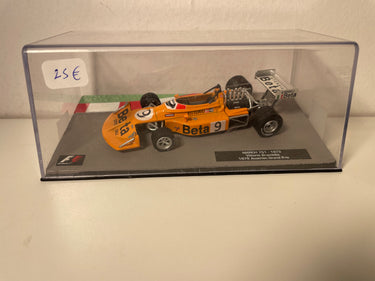


Model Car March 751 orange number 9 (Formula 1) - 1975 Austrian Grand Prix
Scale 1/43
Driver: Vittorio Brambilia

Your payment information is processed securely.
%20-%201975%20Austrian%20Grand%20Prix)

Chargement de vos recommandations...
March 751 Formula 1 - 1975 Austrian Grand Prix: A Legendary Diecast Model Car
This exceptional 1:43rd scale diecast model car faithfully recreates the iconic orange March 751 number 9 driven by Vittorio Brambilla during the unforgettable 1975 Austrian Grand Prix. This precision-crafted miniature replica represents one of Formula 1's most dramatic moments, when the Italian driver known as the "Monza Gorilla" claimed his only Grand Prix victory in torrential rain. For collectors seeking authentic die-cast collectibles from the golden era of motorsport, this diecast model car captures the raw spirit and engineering excellence of 1970s Formula 1 racing.
The March 751 holds a special place in Formula 1 history as the car that delivered one of the sport's most memorable victories. This diecast model car preserves that legacy with meticulous attention to detail, from the vibrant orange Beta livery that made the car instantly recognizable on track to the authentic racing number that adorned Brambilla's winning machine. Whether you're an experienced collector of scale model cars or discovering the world of miniature racing replicas, this piece represents an essential addition to any serious collection.
Technical Specifications of This Premium Diecast Model Car
- Scale: 1:43rd - the perfect size for detailed display and comprehensive collections
- Driver Reproduced: Vittorio Brambilla, "The Monza Gorilla"
- Race Number: 9 - as raced in the 1975 Austrian Grand Prix
- Livery: Iconic March orange with Beta Tools sponsorship
- Details: Open cockpit configuration, period-correct rear spoiler, authentic race finishes including tire compounds and suspension geometry
- Materials: High-grade Zamac metal body combined with precision-molded plastic components for durability and authenticity
- Collector Grade: Museum-quality reproduction suitable for display and investment
The Engineering Story Behind the March 751
The March 751 diecast model car represents far more than a simple miniature - it embodies a pivotal moment in racing engineering history. Designed by the brilliant Robin Herd for the 1975 Formula 1 season, the 751 showcased significant advances over its predecessor, the March 741. The car featured an innovative aluminum monocoque chassis design that prioritized both rigidity and weight reduction, paired with the legendary 3-liter Ford Cosworth DFV V8 engine that dominated the era.
March Engineering, established in 1969 by a consortium of visionaries including Max Mosley and Robin Herd, quickly gained respect as an innovative constructor capable of competing against established giants like Ferrari and McLaren. The name "March" itself derives from the initials of its founders - Mosley, Alan Rees, Graham Coaker, and Herd - with an additional "A" linking them together. This diecast model car celebrates the entrepreneurial spirit that characterized the team's approach to motorsport.
The 751 incorporated substantial aerodynamic refinements that distinguished it from earlier March designs. Engineers focused particularly on optimizing the rear wing profile and reshaping the nose cone to improve airflow characteristics. These modifications aimed to maximize aerodynamic downforce while minimizing drag - a delicate balance that remains central to racing car development today. The result was a machine that, in the right hands and conditions, could challenge the established order.
Why This Diecast Model Car Represents Racing Heritage
Collecting diecast model cars from the 1970s Formula 1 era offers enthusiasts a tangible connection to motorsport's most romantic period. The March 751 exemplifies an age when drivers were genuine heroes, teams operated on passion as much as budget, and single-seaters featured pure, functional designs unencumbered by modern complexity. This die-cast replica captures that essence through careful attention to period details and authentic color schemes.
The 1975 season witnessed intense competition between emerging talents and established champions. The March 751, despite operating on a modest budget compared to factory teams, proved capable of extraordinary performances. This diecast model car commemorates a David-versus-Goliath story that resonates with racing fans across generations. The orange livery, simple yet striking, became synonymous with March's independent spirit and determination.
A Victory Lap for the Ages: The Rain-Soaked Austrian Triumph
The 1975 Austrian Grand Prix at the Österreichring remains forever etched in Formula 1 folklore as one of the sport's most dramatic races. On August 17, 1975, Vittorio Brambilla delivered a masterclass in wet-weather driving that showcased why he earned his fearsome reputation. This diecast model car immortalizes the machine that conquered treacherous conditions when many established drivers struggled to maintain control.
As torrential rain transformed the high-speed Austrian circuit into a hazardous skating rink, Brambilla attacked with characteristic aggression. Starting from eighth position, he carved through the field with breathtaking commitment, passing championship contenders including Niki Lauda on his home circuit. The race organizers, responding to increasingly dangerous conditions and pleas from team principals, stopped the race after just 29 of the scheduled 54 laps.
When Brambilla saw the chequered flag waving through the spray, overcome with joy at achieving his maiden Formula 1 victory, he threw his arms skyward in celebration. In that moment of pure elation, he lost control of the March 751, sliding backwards into the barriers at the finish line! The impact damaged the car's nose cone, yet Brambilla completed a triumphant victory lap with the front bodywork flapping wildly - a fitting conclusion to an extraordinary performance.
This race victory held special significance as it would prove to be Brambilla's only Formula 1 win across his 74-race career. It also marked March Engineering's sole victory as a constructor in Formula 1's premier category. Due to the shortened race distance, Brambilla received just 4.5 championship points rather than the full nine points awarded for victories, but the achievement's historical importance far outweighed the reduced points haul. Tragically, the weekend was also marked by the fatal injuries sustained by American driver Mark Donohue in practice, adding a somber dimension to the celebrations.
Today, collectors prize diecast model cars from this era precisely because they represent such compelling human stories alongside technical achievement. This particular model captures a perfect storm of circumstances - the right driver, the right car, the right conditions - that produced an unforgettable sporting moment.
Diecast Model Cars and the Collector's Passion
The global market for diecast model cars has experienced remarkable growth, with adult collectors now representing approximately 60% of all purchases worldwide. These miniature replicas have evolved from simple toys into sophisticated collectibles that appreciate in value while celebrating automotive heritage. The 1:43 scale, as featured in this March 751 reproduction, represents the most popular format among serious collectors, offering an ideal balance between detail and display practicality.
Quality manufacturers investing in these die-cast collectibles prioritize accuracy and craftsmanship. Modern production techniques allow for intricate details such as working suspension components, precisely replicated sponsor logos, and accurate color matching to original race liveries. This March 751 diecast model car benefits from contemporary manufacturing standards while honoring historical accuracy.
Collectors typically organize their diecast model cars by theme - whether focusing on specific teams, drivers, eras, or circuits. The March 751 fits naturally into multiple collection categories: iconic Formula 1 victories, 1970s racing cars, March Engineering heritage, or rain-race specialists. Its distinctive orange livery also makes it a visually striking display piece that draws attention in any collection.
Investment Value and Collectibility of Formula 1 Diecast Model Cars
The diecast model car market has matured into a recognized alternative investment category, with limited-edition pieces appreciating significantly over time. Models commemorating historic victories, particularly those from the 1970s golden era, tend to maintain strong resale values. The March 751's unique story - combining an underdog constructor, a charismatic driver's only victory, and dramatic weather conditions - enhances its appeal to collectors worldwide.
Several factors contribute to a diecast model car's investment potential. Rarity matters tremendously; limited production runs create scarcity that drives demand. Historical significance plays an equally important role - models representing milestone moments command premium prices. Condition remains paramount; mint-condition pieces in original packaging consistently outperform opened or damaged examples in the secondary market.
This particular March 751 die-cast replica represents excellent value for collectors at multiple levels. Novice collectors gain an entry point into Formula 1's golden age through an affordable yet historically significant piece. Experienced enthusiasts appreciate the model's rarity and the compelling narrative it represents. Investment-minded buyers recognize that models from this era, particularly those celebrating unique victories, have demonstrated consistent value appreciation.
Displaying Your March 751 Diecast Model Car
Proper display enhances both the visual impact and preservation of diecast model cars. The March 751's vibrant orange livery benefits from strategic lighting that highlights its details without causing fading. Many collectors choose dedicated display cases that protect against dust accumulation while allowing 360-degree viewing. The 1:43 scale size makes it suitable for both individual showcase displays and as part of larger thematic collections.
Creating thematic displays around this model amplifies its storytelling power. Pairing it with other 1970s racing cars creates a compelling period display that captures the era's competitive spirit. Alternatively, grouping it with other rain-race winners or March Engineering models builds focused collection narratives that appeal to specialized interests.
Climate control considerations matter for long-term preservation of die-cast collectibles. Excessive humidity can affect metal components, while direct sunlight fades painted surfaces. Serious collectors maintain their diecast model cars in temperature-controlled environments away from windows, ensuring these miniature treasures remain pristine for future generations.
The March Legacy in Formula 1 History
March Engineering's Formula 1 journey spanned multiple decades, with periods of both innovation and struggle. The company pioneered the customer car concept, selling racing chassis to smaller teams while simultaneously competing with its factory effort. This dual approach democratized Formula 1 participation during the 1970s, allowing ambitious privateers like Frank Williams to establish teams that would later dominate the sport.
Beyond Formula 1, March achieved tremendous success in junior formulae and American racing categories. The company dominated Formula 2 throughout the late 1970s and early 1980s, developing numerous drivers who later reached Formula 1. March's eventual venture into IndyCar racing produced multiple championship-winning cars, cementing the company's reputation for versatile engineering excellence.
This diecast model car connects collectors to that broader legacy. While representing a specific moment - Brambilla's Austrian triumph - it also symbolizes March's impact on motorsport development. The orange livery became an iconic part of Formula 1's visual heritage, instantly recognizable to fans who witnessed the era and educational for newer enthusiasts discovering racing history.
Caring for Your Die-Cast Collectibles
Proper maintenance ensures diecast model cars retain their condition and value over time. Gentle dusting with soft brushes removes accumulated particles without scratching painted surfaces. Avoid household cleaners, which may contain chemicals that degrade plastic components or remove paint details. Specialized model car cleaning products, when necessary, provide safe alternatives for more thorough cleaning.
Handling protocol matters significantly for maintaining condition. Always grasp models by their chassis rather than delicate components like wings, mirrors, or wheels. The oils from human skin can gradually degrade certain finishes, so many serious collectors wear cotton gloves when examining their pieces. This practice particularly benefits investment-grade diecast model cars where condition directly impacts resale value.
Original packaging preservation enhances collectibility substantially. Buyers in the secondary market consistently pay premiums for models retaining their factory boxes and documentation. Even if displaying your March 751 outside its packaging, carefully store the box in a dry, stable environment. Complete packaging demonstrates provenance and authenticity, both crucial factors for serious collectors.
Why Collectors Choose 1970s Formula 1 Diecast Model Cars
The 1970s represents Formula 1's transition from gentleman-racer romanticism to modern professionalism, creating a uniquely compelling era for collectors. Cars featured elegant, purposeful designs before aerodynamics dominated aesthetics. Liveries emphasized bold colors and simple graphics rather than complex sponsor arrangements. Drivers achieved celebrity status through raw talent and personality rather than marketing machinery.
This March 751 diecast model car encapsulates those qualities perfectly. Its simple orange paint scheme with Beta Tools branding reflects an era when a handful of sponsors sufficed to fund a racing program. The car's mechanical layout - visible in this model's open cockpit detail - reveals engineering approaches recognizable to enthusiasts even today. These factors combine to create timeless appeal that transcends changing tastes.
Nostalgia drives significant interest in 1970s Formula 1 collectibles. Fans who witnessed the era firsthand seek tangible connections to memories of watching races on television or attending circuits in person. Younger collectors discover these stories through historical documentation and find inspiration in the period's adventurous spirit. This cross-generational appeal ensures sustained demand for quality die-cast replicas from this golden age.
Building a Formula 1 Diecast Model Car Collection
Starting a collection centered on Formula 1 diecast model cars rewards enthusiasts with both educational value and aesthetic pleasure. Many collectors begin by focusing on a specific era, team, or driver before expanding their scope. The March 751 serves as an excellent foundation piece, representing both historical significance and visual appeal while remaining attainable for collectors at various budget levels.
Successful collection building requires research and patience. Understanding the stories behind each model enriches the ownership experience beyond mere accumulation. This March 751's narrative - the underdog constructor, the charismatic driver, the dramatic victory - exemplifies how great collections tell compelling stories through carefully chosen pieces. Each addition should bring new dimensions to your overall collection narrative.
Documentation enhances collection value considerably. Maintain records of purchase dates, sources, and prices paid. Photograph your diecast model cars regularly, both for insurance purposes and to track condition over time. Consider creating a digital catalog that includes historical information about each model's significance. These practices transform casual collecting into serious curation.
The Art of Scale Model Manufacturing
Modern diecast model car production combines traditional craftsmanship with cutting-edge technology. Manufacturers begin with extensive research, studying original vehicles through photographs, technical drawings, and sometimes physical inspection. This research phase ensures accuracy in every dimension, from overall proportions to minute sponsor logo placement.
The production process starts with precision tooling that creates the basic metal casting. High-pressure die-casting forces molten zinc alloy into detailed molds, capturing intricate surface textures and panel lines. After cooling, craftspeople assemble multiple components - body, chassis, wheels, interior details - using specialized techniques that ensure both durability and accuracy.
Painting represents perhaps the most critical phase for visual authenticity. Multiple layers of specially formulated paints recreate original racing colors with remarkable fidelity. Skilled decorators then apply tampo-printed sponsor logos, racing numbers, and other markings with microscopic precision. This March 751 diecast model car benefits from these sophisticated processes, resulting in a miniature that honors the original racing machine.
Frequently Asked Questions About This Diecast Model Car
What makes the March 751 special among Formula 1 models?
The March 751 represents Vittorio Brambilla's only Formula 1 victory and March Engineering's sole win as a constructor. This unique historical significance, combined with the dramatic circumstances of the rain-shortened Austrian Grand Prix, makes it highly desirable among collectors. The distinctive orange livery also stands out visually in any collection of diecast model cars from this era.
How should I display this 1:43 scale die-cast replica?
The 1:43 scale offers versatility for display. Individual display cases with clear acrylic covers protect against dust while showcasing the model's details. Alternatively, wall-mounted shelving can accommodate multiple models in thematic arrangements. Keep your diecast model car away from direct sunlight and maintain stable temperature conditions to preserve paint finishes and prevent material degradation over time.
Is this diecast model car suitable for investment purposes?
Formula 1 diecast model cars from the 1970s have demonstrated consistent value appreciation, particularly limited editions commemorating historic victories. The March 751's unique story enhances its investment potential. However, condition matters enormously - maintain original packaging, handle carefully, and store properly. While past performance suggests good investment prospects, collect primarily for enjoyment rather than guaranteed financial returns.
What scale is best for Formula 1 model collections?
The 1:43 scale, featured in this March 751 reproduction, represents the most popular choice among serious collectors worldwide. It offers excellent detail visibility while remaining space-efficient for larger collections. Larger 1:18 scales provide even more intricate details but require significantly more display space. Smaller 1:64 scales suit collectors focusing on comprehensive team or season representations where space limitations matter.
How can I verify the authenticity of diecast model cars?
Authentic models feature manufacturer markings on their undersides, typically including brand name, scale, and licensing information. Quality die-cast collectibles include sharp, precise details in paint application and part fitment. Original packaging provides critical authentication, displaying proper licensing logos and detailed product information. Purchase from reputable dealers who stand behind their inventory's authenticity.
What maintenance do diecast model cars require?
Regular gentle dusting with soft brushes prevents accumulation that could scratch surfaces. Avoid chemical cleaners; use only products specifically designed for model cars if deeper cleaning becomes necessary. Handle models by their chassis rather than delicate components. Store in stable environments away from extreme temperatures, direct sunlight, and humidity. These simple practices preserve both appearance and value indefinitely.
Connecting With the Global Diecast Model Car Community
Collectors worldwide share their passion for diecast model cars through online forums, social media groups, and specialized websites. These communities provide valuable resources for identifying rare pieces, learning about upcoming releases, and connecting with fellow enthusiasts who appreciate Formula 1 history. Many experienced collectors willingly share knowledge about proper care, display techniques, and market values.
Attending collector shows and exhibitions offers opportunities to view exceptional collections in person while discovering pieces unavailable through conventional retail channels. These events often feature specialist dealers offering rare diecast model cars alongside experts who can authenticate pieces and provide historical context. The camaraderie among collectors enhances the hobby's social dimension beyond solitary collecting.
Consider joining dedicated Formula 1 model car clubs or collector associations. These organizations frequently organize events, publish newsletters containing research articles, and maintain databases documenting model releases across manufacturers and eras. Membership provides access to specialized knowledge that enriches your understanding and appreciation of pieces like this March 751 die-cast replica.
Conclusion: A Timeless Piece of Formula 1 Heritage
This March 751 orange number 9 diecast model car transcends its role as a simple collectible. It represents a pinnacle moment in motorsport history when courage, skill, and determination overcame superior resources. Vittorio Brambilla's rain-soaked triumph at the 1975 Austrian Grand Prix embodies everything that makes Formula 1 compelling - drama, danger, and the triumph of human spirit against challenging odds.
For collectors seeking authentic die-cast replicas from Formula 1's golden era, this model delivers exceptional value through its combination of historical significance, manufacturing quality, and visual appeal. Whether displayed individually as a conversation piece or integrated into a comprehensive collection of 1970s racing cars, it brings tangible connection to an extraordinary period in automotive competition.
The March 751 diecast model car reminds us that racing's greatest stories often emerge from unexpected sources. Small teams with limited budgets, driven by passion and innovation, occasionally achieved glory against established powers. That spirit continues inspiring new generations of racing fans who discover these tales through carefully preserved artifacts like this beautiful miniature replica. Add this piece to your collection and preserve a remarkable chapter of Formula 1 history for future enthusiasts to discover and celebrate.
Même compétition : formule 1 f1


Même origine : britanniques


Frequently Asked Questions
How to understand the scales of miniatures?
Scale indicates the reduction ratio between the real car and the miniature. For example, at 1:43 scale, each centimeter on the miniature corresponds to 43 centimeters on the real vehicle.
Concretely, a 1/18 scale Ferrari model is approximately 25-30 cm long, while in 1/43 scale it measures approximately 10 cm.
What scales are available?
Our model cars are mainly offered in 1/43, 1/24, 1/18 and 1/87 (HO) scales. The scale is always indicated in the product sheet.
The smaller the second number, the larger the model car (e.g. 1/18 is larger than 1/43).
Does the model car come with protection?
Yes, each model car is systematically delivered in its protective box. This box preserves the collectible value and protects your model car from dust and shocks.
How is my package protected during transport?
We package each order with the utmost care: bubble wrap, appropriate cushioning, and polystyrene. Your model car is perfectly secure during its journey.
What is the delivery time?
In-stock items are shipped within 24-48 hours. Please allow 2-3 business days for France via Colissimo or 4-5 days via Mondial Relay.
The model car is no longer in stock, when will you have it?
It's impossible for me to know exactly when I'll receive a new stock because I receive arrivals in dribs and drabs. Please contact me so I can keep you informed as soon as it's available.
What our customers say
Customer feedback and testimonials